
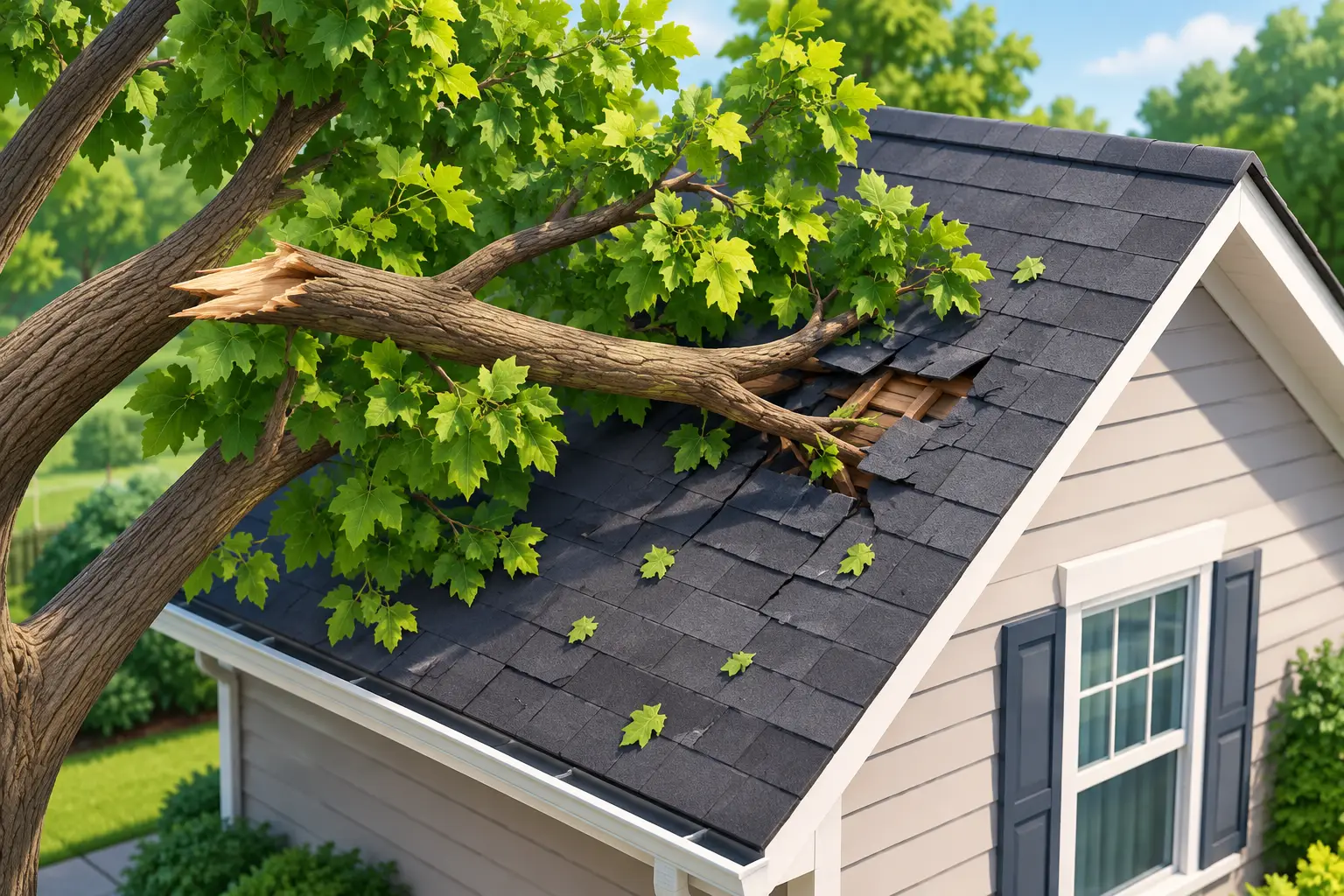
A limb may not need to crash through your roof to cause a costly problem. Can tree limbs damage roofs? Absolutely. Branches that scrape shingles in the wind, hold moisture against the roofline, or break during an Oklahoma storm can all lead to damage that starts small and becomes expensive.
For homeowners, the concern is not just whether a tree looks close to the house. It is whether the tree is healthy, how it moves in high wind, where its weight is concentrated, and whether its limbs are already making contact with the roof. A professional assessment can identify the risk before the next severe-weather forecast turns it into an emergency.
How Tree Limbs Damage Roofs
Roof damage usually happens in one of two ways: repeated contact over time or a sudden impact. Both deserve attention, but the warning signs can look very different.
A branch rubbing against shingles may seem minor, especially when the weather is calm. During windy days, however, that repeated friction can wear away the protective granules on asphalt shingles. It can also loosen shingle edges, damage flashing near valleys or chimneys, and create openings where water can work its way underneath.
The bigger threat is a heavy, dead, split, or poorly supported limb breaking loose. Even a medium-sized limb can crack shingles, puncture decking, bend gutters, or damage soffit and fascia. Larger limbs can cause structural damage that requires immediate roof repair and careful tree removal before anyone can safely inspect the area.
Trees do not have to fall directly on a home to create trouble. A branch that lands on a gutter can pull it away from the roofline. A limb resting on the roof can trap leaves and moisture. Over time, that damp debris can contribute to algae growth, shingle deterioration, and hidden rot around vulnerable roof edges.
The Roof Risks of Overhanging Branches
Overhanging limbs create risk even when they are healthy. Their reach gives squirrels and other pests an easier path onto the roof, while leaves, twigs, and seed pods collect in gutters and valleys. Clogged gutters can allow water to overflow against fascia boards and siding instead of draining away from the home.
Shade is another factor. Trees bring welcome relief during Oklahoma summers, but dense branches hanging over a roof can keep parts of it damp long after rain. That does not mean every shaded roof has a problem. It does mean the roof may need closer monitoring, especially if debris routinely gathers in the same area.
The right solution depends on the tree and the property. Some trees only need selective pruning to create safe clearance and reduce weight at the ends of long limbs. Others may have decay, storm damage, poor structure, or a location that makes removal the safer long-term choice. Cutting too aggressively is not the answer. Improper cuts can stress a tree, encourage weak regrowth, and leave the homeowner with a different hazard a few years later.
Wind Changes the Equation
A branch that clears the roof by a few inches on a still day may strike it repeatedly during a storm. Wind causes limbs to sway, twist, and drop under the weight of rain. Ice can make the situation worse by adding substantial weight to branches that were already overextended.
This is why tree risk should be evaluated with more than a quick look from the driveway. Cracks where limbs join the trunk, hanging branches, visible decay, cavities, mushroom growth, and limbs extending far beyond their support can all signal a higher chance of failure. No one can predict every break, but addressing obvious hazards gives your roof a much better chance when severe weather arrives.
Signs a Tree May Be Putting Your Roof at Risk
Homeowners should take a closer look after major wind, hail, or ice events, but there are also year-round signs worth noticing. Scrape marks or missing granules on shingles below branches can indicate repeated contact. Twigs and leaves collecting in one roof valley may point to an overhanging limb. Bent gutters, damaged gutter guards, or fresh dents around the eaves can mean something has already hit the house.
Look at the tree itself from the ground. Dead wood often has no leaves when surrounding branches are full, though that can vary by season. A branch that suddenly droops, develops peeling bark, or shows a visible split should be treated seriously. Do not climb onto the roof or try to pull down a suspended limb. A damaged branch can shift without warning, and roof surfaces are unsafe to walk without the right equipment and experience.
If a limb is resting on the roof after a storm, keep people away from the area below it. Avoid moving it yourself, particularly if it is caught in power lines or has damaged the roof structure. The safest next step is to have qualified tree professionals assess the limb and remove it in a controlled way. Once the area is safe, a roofing professional can determine whether repairs are needed.
When Pruning Is Enough and When Removal Makes Sense
Pruning is often the practical choice when a healthy tree has a few limbs extending over the house. Targeted trimming can improve clearance, remove dead wood, reduce end weight, and preserve the tree’s natural shape. The goal is not to strip the canopy. It is to reduce roof contact and failure risk while maintaining the tree’s health and stability.
Removal may be the better option when the tree has significant decay, a major structural crack, repeated limb failures, extensive storm damage, or roots and trunk placement that create an ongoing threat to the home. It may also make sense when a tree is too large for its location and will require frequent heavy pruning just to stay clear of the roof.
This is one area where cost should be weighed against future exposure. A smaller pruning job can be a smart preventative investment for a sound tree. But repeatedly cutting back a declining tree beside a home may only delay a more complicated emergency removal. An in-person estimate allows the crew to assess the tree, access around the home, cleanup needs, and the safest path forward.
What to Do After a Limb Hits Your Roof
A roof strike can be stressful, especially after a nighttime storm. Start by making the area safe. If you see downed power lines, smell gas, notice major structural damage, or have water entering the home quickly, contact the appropriate emergency services and utility providers first.
For a limb that is on the roof but not creating an immediate utility hazard, avoid cutting it, dragging it, or placing a ladder against the damaged area. Removing weight in the wrong sequence can cause more roof damage or make the limb shift unexpectedly. Take clear photos from a safe location for your records, then arrange for professional tree removal and roof evaluation.
Fast cleanup matters, but careful cleanup matters just as much. A crew should protect the work area, use the right equipment for the tree’s size and position, remove debris thoroughly, and avoid causing additional damage to the property. If the work involves a fence, gate, landscaping, or tight backyard access, planning the job properly makes a real difference.
A Safer Way to Protect Your Home
Regular tree care is one of the most practical ways to protect a roof, gutters, fences, and the people who use your yard. There is no single clearance distance that fits every tree or roofline, because branch movement, species, health, and storm exposure all matter. What matters most is addressing contact, dead wood, excessive overhang, and visible structural concerns before they become storm damage.
For Oklahoma City-area homeowners, a professional tree inspection before severe-weather season can bring peace of mind without turning the process into a major project. Fowler’s Tree & Fence can help evaluate hazardous limbs, provide straightforward options, and handle trimming, removal, and cleanup with safety at the center of the job.
A well-maintained tree should add shade and value to your property, not keep you watching the roofline every time the wind picks up.


0 Comments