
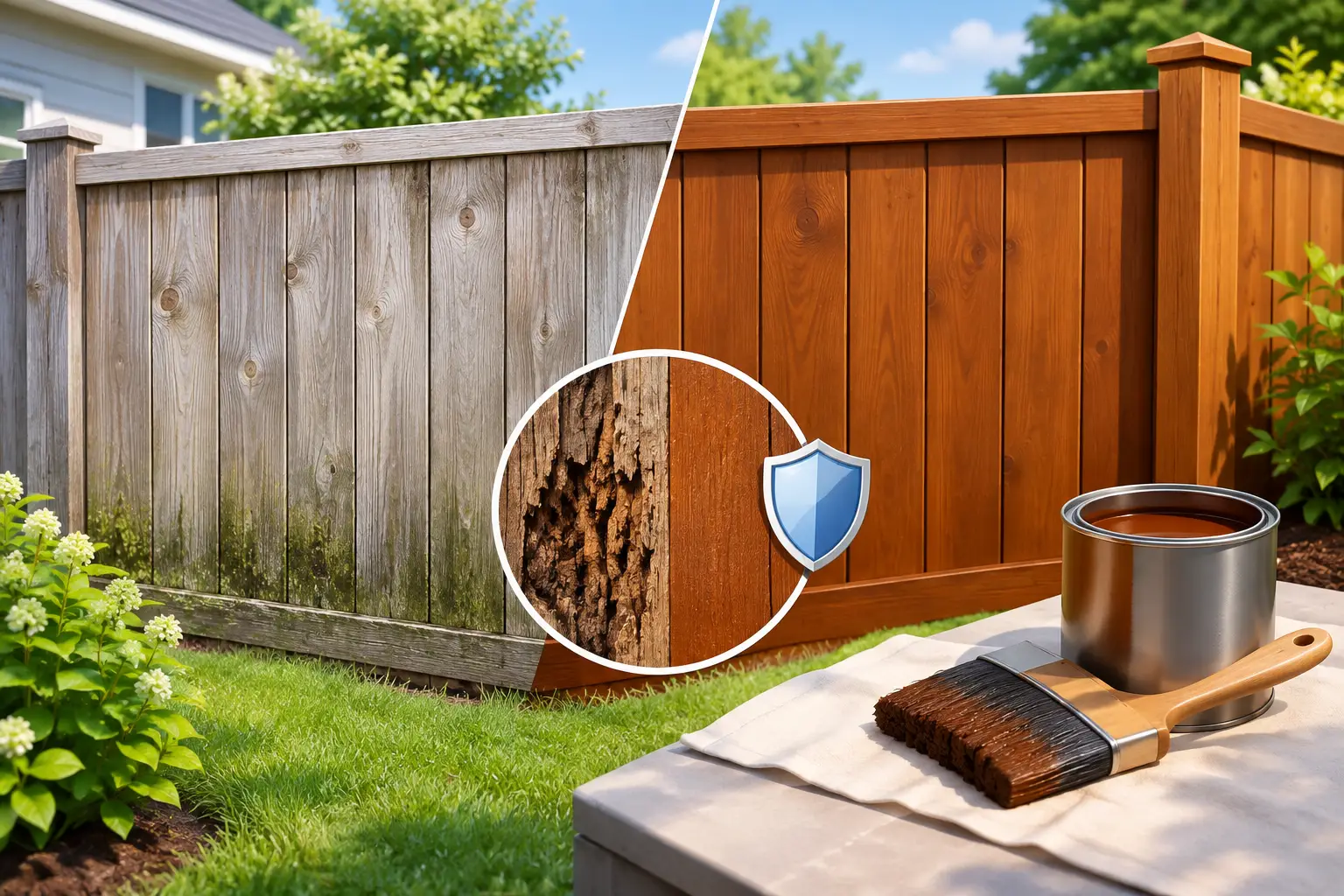
A wood fence can look solid from the yard while decay is already starting at the bottom of a post, behind a warped picket, or along a loose rail. So, does fence staining prevent rot? It helps, but stain is not a permanent shield against rot. Its real job is to slow water absorption and protect the wood from the weather that makes decay more likely.
For Oklahoma City homeowners, that distinction matters. Our fences deal with hard sun, wind-driven rain, spring storms, humid stretches, and soil that can hold moisture around posts. A properly prepared and stained fence has a better chance of lasting, but only when the underlying wood, drainage, and installation are in good condition.
Does Fence Staining Prevent Rot Completely?
No. Fence staining cannot stop rot in wood that is already decaying, and it cannot overcome standing water, failing posts, or boards that stay wet for days at a time. Wood rot is caused by fungi, and fungi need moisture to grow. When stain helps keep excess moisture out of the wood, it reduces one of the main conditions rot needs.
Think of a quality exterior stain as preventive maintenance, not a repair. A good stain penetrates the surface and adds water resistance. Many products also include mildewcides and UV protection. That combination helps the fence dry more quickly after rain and slows the cracking, splitting, and surface breakdown that let more water into the wood.
The amount of protection depends on the product and the condition of the fence. A transparent stain may preserve a natural wood appearance but generally offers less UV protection than a semi-transparent or solid-color product. A more opaque stain can provide stronger sun protection, though it covers more of the wood grain. The right choice comes down to the look you want, the type of wood, and how exposed the fence is.
Why Moisture Gets Into Fences
Most fence rot begins where water collects or where the protective finish has failed. The bottoms of pickets, post bases, horizontal rails, gate joints, and the tops of posts are common trouble spots. End grain is especially vulnerable because it can pull in moisture more easily than the face of a board.
Stain can protect these areas when it is applied correctly, but it cannot fix the conditions that keep them wet. A fence buried in overgrown vegetation, pressed against a sprinkler line, or sitting in poorly drained soil will face ongoing moisture exposure. Splashback from rain, wet leaves against the boards, and soil built up too high along the fence can all shorten the life of the wood.
Storm damage creates another opening. A cracked board, loose cap, leaning post, or separated rail can let water move into places that were previously protected. After strong Oklahoma weather, a quick inspection can catch small damage before it turns into a section that needs replacement.
Staining Works Best When Preparation Is Done Right
The stain on the surface is only as dependable as the preparation underneath it. Applying stain over dirt, mildew, gray weathered fibers, peeling old finish, or damp wood often leads to uneven coverage and early failure. The fence may look refreshed for a short time, but water can still find its way through weak spots.
A professional fence staining job starts with an honest look at the structure. Rotten pickets, loose rails, damaged gate framing, and unstable posts should be addressed before staining. Stain cannot restore structural strength to soft wood. Covering decay may improve appearance temporarily, but it does not make a fence safer or more durable.
After needed repairs, the wood should be cleaned and allowed to dry thoroughly. The crew also needs to account for the forecast. Staining too close to rain or when the wood has retained moisture can interfere with penetration and curing. On a large fence, careful preparation and consistent application make a major difference in how uniform the finished color looks and how long it holds up.
Stain, Sealer, and Paint Are Not the Same Thing
Homeowners often use these terms interchangeably, but they protect wood in different ways. Many exterior fence stains include water-repellent qualities, while a clear sealer focuses primarily on resisting moisture. Paint forms a film over the wood and can provide a strong barrier when applied to a properly prepared surface.
Each option has trade-offs. Clear sealers offer little UV protection, so wood may still fade and weather quickly under direct sun. Stains usually penetrate rather than sit heavily on the surface, which can make future maintenance easier. Paint offers broad color choices and good coverage, but if moisture gets behind a failing paint film, peeling and trapped moisture can become a problem.
For a wood privacy fence, stain is often a practical choice because it protects while keeping some of the wood character visible. It is also easier to maintain than a badly peeling painted surface. Still, the best finish is the one matched to the fence’s age, wood species, exposure, and current condition.
Signs Your Fence Needs More Than Stain
A weathered fence does not always need replacement. Surface graying, minor dryness, fading, and light checking can often be addressed with cleaning, preparation, and a quality stain. But there are times when staining is the wrong next step.
Watch for wood that feels soft or spongy when pressed, boards that crumble at the bottom, dark areas that continue spreading, posts that lean, rails pulling away, or gates that no longer hang square. These are signs that decay or structural movement may be involved. Replacing the affected components first is usually the better long-term investment.
The same is true if the fence has been damaged by a fallen limb or severe wind. Repairing the structure before applying a finish prevents you from spending money on a surface treatment that will need to be disturbed again during repairs. A fence crew can assess whether targeted repairs are enough or whether age and damage have reached the point where replacement makes more sense.
How Long Does Fence Stain Last in Oklahoma?
There is no single schedule that fits every fence. Exposure is the biggest factor. A fence facing full afternoon sun and open to wind and rain will usually need attention sooner than one in a protected backyard. Soil contact, irrigation, nearby trees, and the quality of the previous preparation also affect service life.
As a general rule, plan to inspect a stained wood fence every year and expect maintenance staining every few years rather than treating it as a one-time project. The best time to act is when water stops beading on the surface, the color fades noticeably, or small dry cracks begin appearing. Waiting until boards are severely weathered creates more preparation work and leaves the fence exposed longer.
Keep vegetation trimmed back from the fence, direct sprinklers away from it, and avoid piling mulch or soil against the bottom of the boards. Those simple property conditions matter just as much as the stain itself. If trees or brush are crowding the fence line, clearing them can improve airflow and help the wood dry after rain.
Protect the Fence Before Rot Takes Hold
Fence staining is one of the smartest ways to extend the life of sound wood, especially when it is paired with timely repairs and good drainage. It reduces the moisture exposure that leads to rot, but it is not a substitute for replacing compromised wood or correcting a wet fence line.
At Fowler’s Tree & Fence, we look at the whole job: the condition of the fence, the repairs it may need, the surrounding brush or limbs, and the finish that makes sense for the property. A clean, well-prepared staining job protects your investment and keeps the fence looking cared for. If you are seeing soft boards, leaning posts, or repeated moisture issues, address those concerns now while the repair is still manageable.


0 Comments