
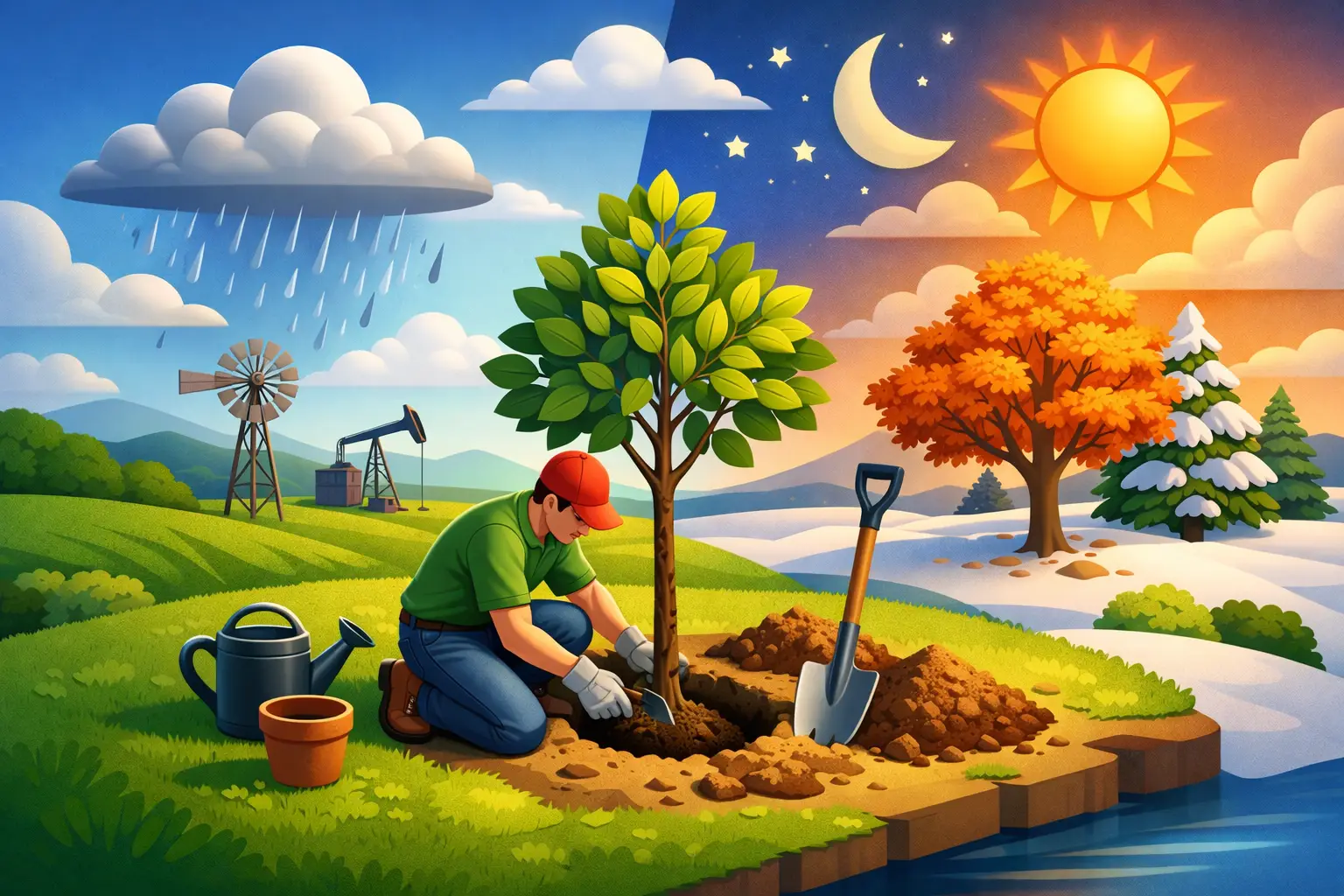
A lot of tree problems start on planting day, not years later. In Oklahoma, timing matters more than many homeowners expect. If you want the best time to plant a tree, the short answer is usually fall – but the right timing also depends on the species, the weather, and the condition of your yard.
Plant too early in summer, and young roots can struggle through heat and drought before they ever settle in. Plant too late in winter, and frozen ground or sudden temperature swings can slow establishment. The goal is simple: give the tree time to build roots before Oklahoma weather starts pushing it hard.
The best time to plant a tree is usually fall
For most Oklahoma City area properties, fall is the best time to plant a tree. From late September through November, the soil is still warm enough for root growth, but the air is cooler and less stressful on a newly planted tree.
That matters because roots keep working after top growth slows down. In practical terms, a tree planted in fall has a better chance to settle in before the long heat of late spring and summer arrives. It is not fighting to support heavy leaf growth and survive extreme temperatures at the same time.
Fall also tends to bring more consistent moisture than midsummer. That does not remove the need for watering, but it makes the establishment period more forgiving. For homeowners who want a healthy start without stacking the odds against the tree, this is usually the safest window.
When spring planting makes sense
Spring can also be a good planting season, especially from late February through April, depending on the weather. If you missed the fall window or need to replace a damaged or removed tree, spring is often the next best option.
The trade-off is that spring-planted trees have less time to develop roots before Oklahoma heat arrives. A mild spring can help, but a quick jump into hot, dry conditions can create stress fast. That means watering and follow-up care become even more important.
Spring is often workable for many shade trees, ornamentals, and container-grown stock, but it is not as forgiving as fall. If the site is exposed, the soil dries out quickly, or the tree is already under stress from transport or handling, fall still has the edge.
Why summer is usually the hardest season
Summer planting is possible, but it is rarely ideal here. High temperatures, dry wind, and intense sun put pressure on even established trees. A newly planted tree has a smaller root system and fewer reserves, so the risk goes up.
This is especially true for larger-caliper trees and species that do not handle heat stress well. If a tree goes in during June, July, or August, it often needs closer watering, more monitoring, and better site preparation just to avoid falling behind.
Sometimes summer planting happens because construction schedules, storm damage, or property improvements leave no other option. In those cases, success depends on choosing the right tree, planting it correctly, and staying consistent with aftercare. The season does not make failure automatic, but it does leave less room for error.
Winter planting depends on the tree and the weather
Winter planting can work in Oklahoma during milder stretches, especially for dormant deciduous trees. If the ground is workable and the tree is properly handled, planting during dormancy can reduce transplant stress.
Still, winter is not a blanket recommendation. Ice, hard freezes, and rapid weather swings can complicate scheduling and installation. Evergreens can be more vulnerable during cold, drying conditions because they continue to lose moisture through their needles.
In other words, winter can be a good opportunity, but it is more dependent on conditions than fall. It is not just about the calendar. It is about what the tree is, what the site looks like, and what the weather is doing that week.
What changes the answer besides the season
The best time to plant a tree is not exactly the same for every yard. Soil condition, drainage, sun exposure, and species all affect the timeline.
Clay-heavy soil, which is common in many parts of the Oklahoma City area, can hold moisture too long in some places and turn hard in others. A low spot that stays wet after rain may not be ready at the same time as a well-drained front yard. If roots sit in soggy soil, the tree can struggle no matter how good the season seems on paper.
Species matters too. Some trees handle transplanting better than others. Native and regionally adapted varieties often perform more reliably because they are already suited to local heat, wind, and periodic drought. Fast-growing trees may look appealing, but they are not always the best long-term choice if they are weak-wooded, short-lived, or poorly matched to the site.
Tree size is another factor. Smaller trees often establish faster than larger ones because the root loss from transplanting is easier to overcome. Homeowners sometimes assume a bigger tree automatically gives a better result, but that is not always true. A smaller, properly planted tree in the right season can outperform a larger one that struggles to catch up.
The planting window is only part of the job
Even if you choose the best time to plant a tree, poor planting practices can cancel out that advantage. Depth matters. Root flare matters. So does how the hole is prepared, how the root ball is handled, and whether the tree is mulched and watered correctly after installation.
One of the most common mistakes is planting too deep. Another is assuming the tree can fend for itself after the first week. New trees need a steady start. That does not mean drowning them with water every day. It means giving them the right amount at the right intervals based on weather, soil, and tree type.
Mulch helps by reducing temperature swings and retaining moisture, but it needs to stay off the trunk. Staking can help in some locations, especially windy ones, but too much support or support left on too long can create other problems. Good planting is not complicated for a trained crew, but it does need to be done carefully.
Oklahoma weather makes timing more important
In some regions, the difference between planting seasons is smaller. In Oklahoma, weather tends to be less forgiving. Heat arrives fast. Wind pulls moisture out of the soil. Heavy rain can be followed by dry stretches. A tree that is already stressed has a harder time handling those swings.
That is why homeowners often benefit from planning tree planting around conditions instead of treating it like any other landscape task. Trees are long-term investments. The right timing helps protect that investment from the start.
It also helps to think beyond the tree itself. Planting near a new fence line, along a property edge, or in a yard with grading or drainage issues can create future conflicts if the layout is rushed. Spacing, mature canopy size, root spread, and visibility all matter. A good planting job should look right now and still make sense years from now.
So when should you schedule tree planting?
If you want the clearest answer, aim for fall first. For most residential properties in the Oklahoma City area, that season offers the best balance of warm soil, lower stress, and better root establishment. Spring is a solid second choice when fall is missed or when project timing requires it. Summer and winter can work, but they call for more caution and closer attention to conditions.
For homeowners who want the job done safely, cleanly, and without guessing, professional planting makes a real difference. A crew that understands local soil, tree selection, spacing, and follow-up care can help prevent the kind of mistakes that are expensive to fix later. Fowler’s Tree & Fence works with homeowners across the Oklahoma City area on tree planting and outdoor property improvements built to last.
The best results usually come from planting before the tree is under pressure, not after. Give it the right start, and the rest of the yard has a much better chance to grow around it well.


0 Comments