
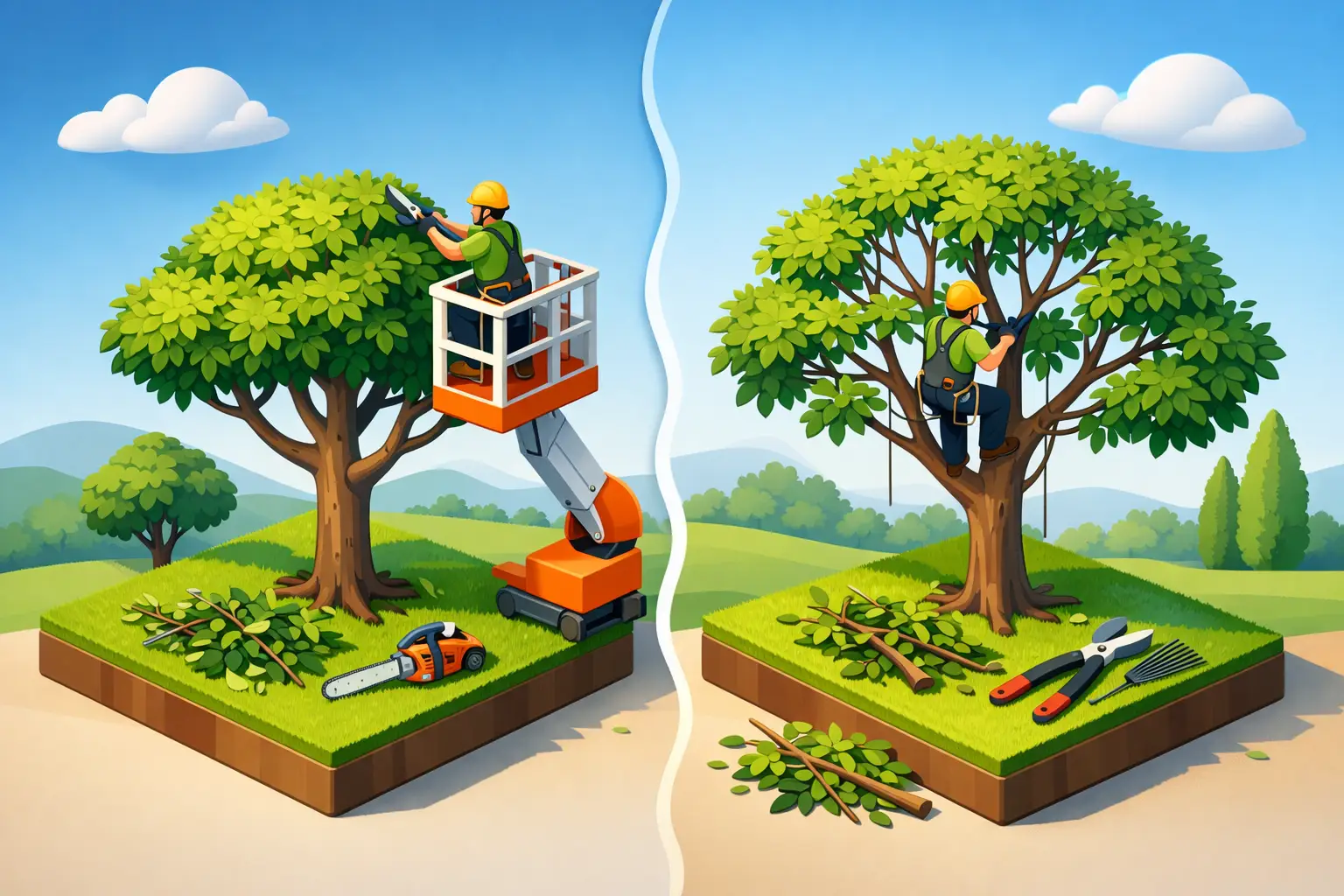
A mature tree can make a yard feel established, shaded, and private. But when limbs begin hanging over a roof, catching too much wind, or crowding each other, the right pruning method matters. Crown reduction versus thinning is not simply a matter of cutting more or less wood. Each approach changes the tree differently, and choosing the wrong one can create new problems for its health, appearance, and safety.
For Oklahoma City homeowners, that decision often comes up after a windy spring storm, an ice event, or years of growth over a driveway, fence, patio, or home. A qualified tree crew evaluates the tree’s structure, species, condition, and surroundings before deciding how to prune it safely.
What Is Crown Reduction?
Crown reduction shortens selected limbs to reduce the overall height or spread of a tree. Instead of cutting a branch back to a stub, proper reduction pruning cuts it back to a healthy side branch that is large enough to continue supporting growth.
The goal is not to make a tall tree suddenly small. It is to reduce the reach and weight of specific sections while preserving a natural-looking canopy. A well-done crown reduction can lower stress on overextended limbs, create clearance from a roof or power line area, and reduce the leverage that wind places on long branches.
This method is often appropriate when a tree has grown too close to a structure, has limbs extending too far over a driveway, or has heavy ends that are beginning to sag. It can also help retain a valuable mature tree when full removal is not necessary.
Crown reduction does remove more noticeable length than thinning, so it must be planned carefully. Cutting too far back can leave large wounds, stimulate weak new shoots, and change the tree’s shape in a way that looks harsh. The best reduction pruning is selective, measured, and based on the tree’s existing branch structure.
When reduction may be the better choice
Reduction is usually considered when the main issue is size, reach, or limb weight. For example, an oak limb that stretches over a roof may need to be shortened, not merely opened up. A tree leaning into a fence line may need selected branches reduced to keep them from rubbing, dropping debris, or putting pressure on the fence during storms.
It can also be a practical option for trees that have become top-heavy. Oklahoma weather can expose weak branch attachments quickly, especially when strong winds hit a dense, overextended canopy. Reducing length and end weight can lessen the strain on certain limbs, although no pruning method can guarantee a tree will never fail in severe weather.
What Is Crown Thinning?
Crown thinning removes selected smaller branches throughout the canopy without significantly changing the tree’s overall height or outline. The purpose is to improve light penetration and air movement while reducing internal crowding and some wind resistance.
A properly thinned tree should still look like the same tree from a distance. It should not appear stripped out, hollow in the middle, or unevenly cut. The work focuses on branches that cross, rub, grow inward, are weakly attached, or compete with stronger limbs.
Thinning can be useful when a canopy has become very dense, when grass or landscape plants below receive little light, or when interior branches are rubbing together. It is also commonly used to remove deadwood and improve the visibility of the tree’s main structure during an inspection.
However, thinning does not solve every safety concern. If a limb is long, heavy, cracked, or hanging directly over a roof, taking out a few small interior branches may not reduce enough weight where it matters. That is when reduction, cabling, or removal may need to be considered depending on the tree’s condition.
Thinning should not mean stripping the tree
Over-thinning is a common problem. Removing too much live foliage at once can stress the tree, expose previously shaded bark to intense sun, and encourage excessive new growth. It may also leave the tree looking sparse without meaningfully improving safety.
Good pruning respects the tree’s limits. The amount removed depends on species, age, health, past damage, and the season. A stressed tree recovering from drought, construction damage, or insect pressure should not be treated the same way as a healthy, vigorous tree.
Crown Reduction Versus Thinning: The Main Difference
The simplest difference is this: crown reduction changes the size or reach of the canopy, while crown thinning changes the density inside the canopy.
Reduction directs growth back by shortening selected limbs. Thinning removes smaller branches to improve spacing, light, and airflow. Both can reduce some wind load, but reduction is generally the more direct choice when a branch is too long, too heavy, or too close to a target such as your house or fence.
A tree may need both methods in the same visit. A crew might reduce one overextended limb above the roof, remove deadwood throughout the canopy, and lightly thin crowded interior growth. The work should be based on the tree’s actual needs, not a one-size-fits-all package.
Why Topping Is Not Crown Reduction
Homeowners sometimes request that a tree be “cut back hard” because it has gotten too tall. That request is understandable, particularly after storm damage. But there is a major difference between crown reduction and topping.
Topping means cutting large branches or the main stem back to stubs or indiscriminate points. It removes a large portion of the canopy quickly and leaves wounds that may not close well. In response, many trees produce fast-growing shoots that are weakly attached and more likely to become future hazards.
Crown reduction uses deliberate cuts to suitable lateral branches. It keeps as much of the tree’s natural structure as possible and avoids the severe, blunt cuts associated with topping. While reduction pruning still involves trade-offs, it is far more thoughtful than simply removing the upper portion of a tree.
If a tree is far too large for its location or has widespread structural decline, removal may be safer and more responsible than repeatedly cutting it back. That is not always the answer, but it should be part of an honest assessment.
What a Professional Crew Looks for Before Pruning
A safe pruning plan starts from the ground, not from a guess. Before equipment comes out, the crew should look at the tree’s overall condition and the risks around it. That includes dead or broken limbs, cracks at branch unions, decay, fungal growth, leaning, root-zone damage, and branches over homes, vehicles, fences, or play areas.
The tree’s species matters too. Some trees tolerate certain pruning approaches better than others. Timing can also affect results, especially for trees that are vulnerable to disease or under stress from hot, dry weather. In Oklahoma City, storm exposure and heat can make routine maintenance more valuable, but they also make careless cuts more costly.
Access is another practical concern. A branch over a backyard fence may require controlled lowering to prevent damage. A limb near service lines needs additional caution, and work near energized power lines should be handled by the utility company or properly qualified line-clearance professionals. No homeowner should assume a ladder, chainsaw, and a few cuts are enough for elevated tree work.
Choosing the Right Outcome for Your Yard
The right question is not, “Should this tree be reduced or thinned?” It is, “What problem are we trying to solve?” If you need more clearance from a roof, driveway, or fence, reduction may be appropriate. If the tree is healthy but crowded and overly dense, thinning may be the better fit. If there are dead, split, or hanging limbs, targeted hazard pruning should come first.
Appearance matters, but safety and long-term structure should lead the decision. A tree should not be cut into a shape that looks temporarily tidy but creates weak regrowth or unnecessary stress later. The best result keeps the tree looking balanced while addressing the issue that brought you to the phone in the first place.
At Fowler’s Tree & Fence, that means looking beyond the branch itself. We consider what is below it, how it affects your home and fence, and how the cleanup will be handled when the work is complete. Safe, clean work protects more than the tree – it protects the rest of your property too.
If a tree is growing over your roof, pushing into a fence line, or dropping limbs after every storm, an in-person assessment can give you a clear path forward. The goal is not to remove growth for the sake of it. It is to make the tree safer, healthier where possible, and better suited to the space it has to grow.


0 Comments