
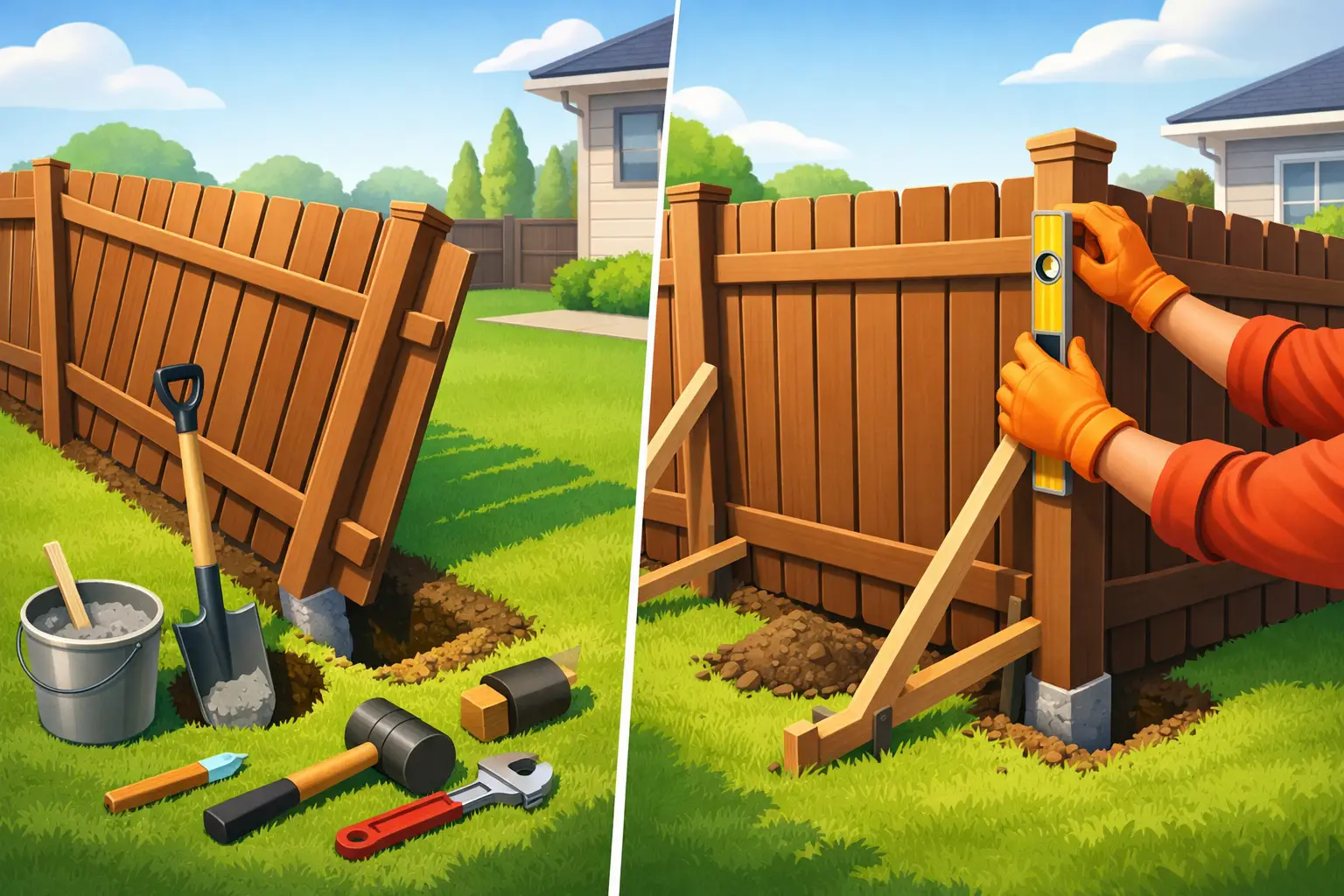
A fence rarely starts leaning all at once. Most of the time, it begins with one post pulling out of line after heavy rain, shifting soil, wind, or plain old age. If you are wondering how to fix leaning fence sections around your yard, the real answer depends on why it started leaning in the first place and how much structural damage is already there.
For many Oklahoma City homeowners, a leaning fence is more than a cosmetic problem. It can affect privacy, security, gate function, and even safety for kids and pets. The longer it sits, the more stress it puts on nearby posts and panels. What starts as a small tilt can turn into a full fence failure after the next storm.
How to fix leaning fence issues starts with the cause
The most common reason a fence leans is post failure. That failure can come from rotted wood at ground level, loose or shallow footings, poor installation, saturated soil, or impact damage. In some yards, tree roots also play a role by pushing on posts or changing the soil around them.
That last part matters more than many homeowners expect. A fence and the landscape around it are connected. If a large root system is lifting one side of a fence line, or if overgrown limbs are dropping repeated weight onto panels, a fence repair by itself may not hold up for long. Fixing the symptom without dealing with the pressure causing it often leads to another lean a few months later.
Not every leaning fence needs full replacement, though. Some fences can be reset with new posts or reinforced sections if the rails and pickets are still in decent shape. Others have reached the point where repair money is better spent on a new installation. The right call comes down to the condition of the materials, the number of affected posts, and whether the fence was built correctly to begin with.
When a leaning fence can be repaired
A repair usually makes sense when the leaning is limited to one section, the wood above ground is still sound, and the surrounding fence line remains stable. In that case, the crew may be able to remove the failed post, reset a new one in proper concrete footing, and reconnect the panel without rebuilding the whole run.
Sometimes the post itself is still usable, but the footing has loosened because the soil has shifted. Other times the post has rotted where it meets the ground, which is common in older wood fences. If caught early, that kind of issue can often be isolated. If several posts are failing along the same run, repair becomes less practical.
Gate areas deserve special attention. Gates put more stress on posts than regular sections do, and when a gate post leans, it often causes dragging, latch problems, or visible sagging. In those cases, simply adjusting the gate hardware is rarely enough. The post has to be corrected first or the problem keeps returning.
When replacement is the better option
Homeowners often ask if a contractor can just straighten the fence and save the rest. Sometimes that is possible. Sometimes it is not the honest recommendation.
If the fence has widespread rot, multiple leaning posts, warped rails, loose pickets, and years of weather wear, repair can turn into a patchwork fix with a short lifespan. You might spend money on one section now, then another section fails after the next round of wind or rain. At that point, replacement is usually the cleaner and more cost-effective route.
A full replacement also makes sense if the original installation was flawed. Posts set too shallow, poor spacing, weak concrete work, or low-grade materials can create recurring problems across the entire fence line. Straightening one part of a badly built fence does not change the underlying issue.
For property owners planning to stay in their home, replacement often provides better value. A properly installed fence improves curb appeal, restores privacy, and gives you a stronger long-term result instead of repeated repair calls.
What professional fence repair usually involves
If you have been searching how to fix leaning fence problems, it helps to know what a professional crew is actually evaluating on site. The first step is checking whether the problem is isolated or systemic. That includes inspecting the lean angle, testing post stability, looking for rot, and examining the rails, pickets, and gate alignment.
From there, the repair may involve removing damaged fence sections, extracting failed posts, digging out old concrete, and installing new posts at the proper depth. Once the new footing is secure, the panel can be reset or rebuilt. If nearby sections have been pulled out of square, they may need adjustment too.
This is where experience matters. Fence repair is not just about making a section look straight again. It has to be stable in Oklahoma weather, including heavy rain, high winds, and hot, dry stretches that cause the soil to expand and contract. A repair that looks fine on day one can fail quickly if the post depth, alignment, and bracing are not handled correctly.
Why DIY fixes often do not last
Many online tips make leaning fence repair sound simple. Drive in a stake, attach a brace, pull the panel upright, and call it good. That kind of temporary support might help for a short time, but it usually does not solve the real issue.
If the post is rotted below grade, bracing the panel does not restore structural strength. If the concrete footing has broken loose, forcing the post upright can actually increase stress on the rails and neighboring posts. If saturated soil is part of the problem, the fence may lean again as soon as the ground shifts.
There is also the risk factor. Removing damaged posts and resetting fence sections takes labor, digging, cutting, and careful alignment. If tree roots, buried utilities, or storm-damaged materials are involved, the job becomes more complicated fast. For most homeowners, this is not a weekend project worth guessing at.
Oklahoma conditions make fence movement more common
In this area, fences take a beating. Clay-heavy soils can hold water and then dry hard, which creates repeated movement around fence posts. Strong winds and spring storms add more pressure. Even a well-built fence can develop issues over time if drainage is poor or nearby trees are affecting the ground.
That is why local evaluation matters. A contractor familiar with Oklahoma City properties is more likely to spot the real reason a fence is leaning instead of treating it like a generic repair. If a tree is contributing to the issue, or if the grade is sending water toward the fence line, those conditions need to be part of the plan.
Because Fowler’s Tree & Fence handles both fencing and outdoor property work, homeowners can get a clearer picture of what is happening around the fence, not just at the fence itself. That often saves time and prevents repeat problems.
Signs you should not wait to schedule repair
A slight lean may not feel urgent, but some warning signs mean it is time to act soon. If the fence moves when pushed, if posts are visibly separating from the ground, if gates no longer close properly, or if panels are twisting after a storm, the structure is already under stress.
You should also pay attention to leaning near driveways, sidewalks, and neighboring property lines. The more a fence shifts, the more likely it is to fall, damage other sections, or create a dispute about boundaries and responsibility. Fast repair is usually simpler and less expensive than waiting for a full collapse.
What homeowners should expect from a good contractor
A reliable fence contractor should give you a straightforward assessment, not a vague promise to straighten everything out. You want clear communication about what failed, whether repair is worth it, how long the fix should last, and whether any surrounding conditions need to be addressed.
Clean work matters too. Fence repair can leave behind broken concrete, damaged materials, dirt piles, and scattered debris if the job is rushed. Homeowners should expect the area to be handled safely and left tidy when the work is done. That is especially important in family backyards where pets and children use the space.
Pricing should reflect the actual scope, whether that means replacing one post, rebuilding a section, or recommending a full fence replacement. The best outcome is not always the cheapest number up front. It is the repair that holds up and does not put you back in the same position a few months from now.
If your fence is leaning, the smartest next step is not guessing how far it can go before it falls. It is getting an honest look at what caused it, what can be saved, and what will truly hold up in your yard.


0 Comments