
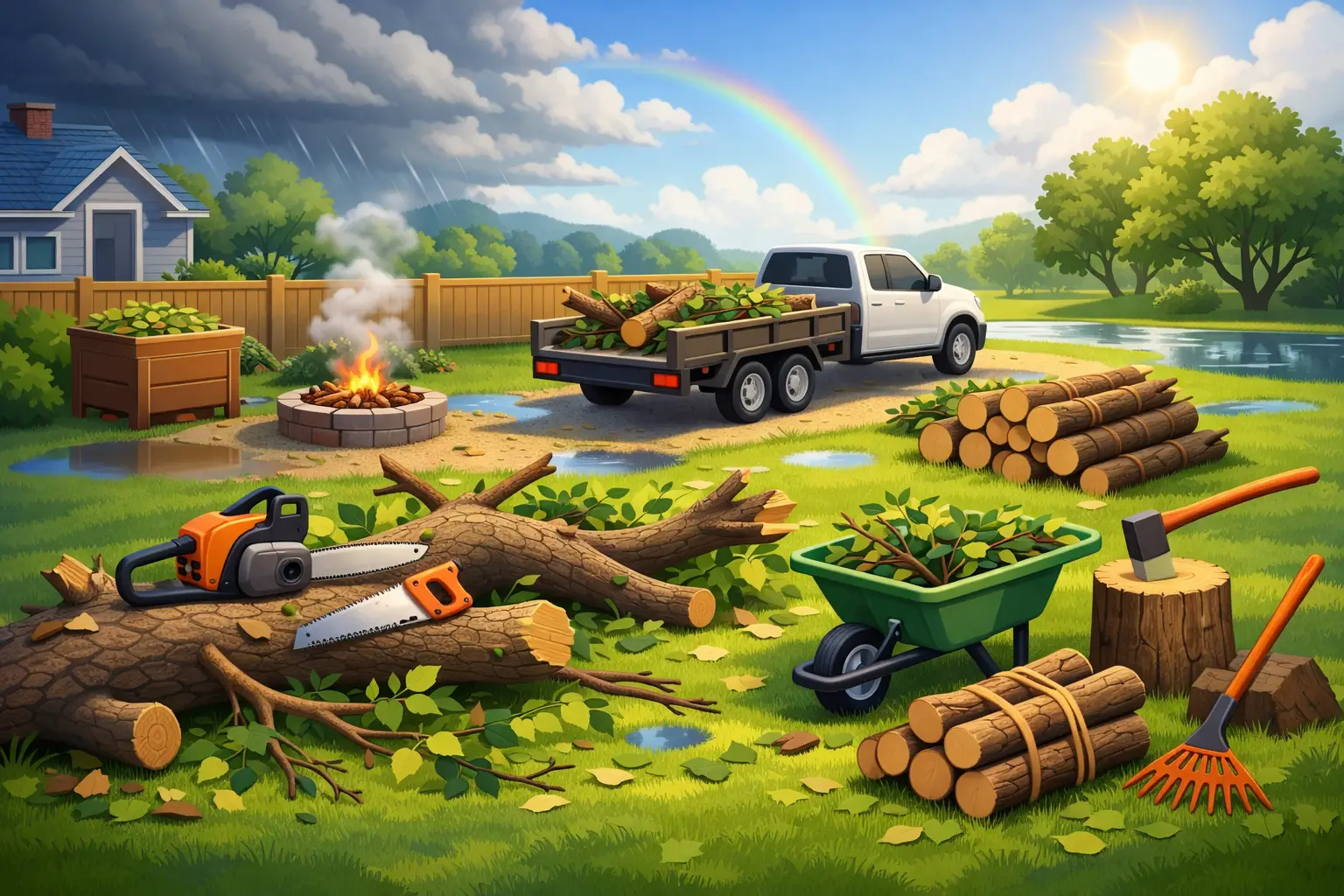
A fallen limb can look like a simple cleanup job until it is resting on a fence, tangled in a power line, or hiding damage to the tree above. Knowing what to do with fallen tree limbs starts with one priority: keep people and property safe before trying to make the yard look normal again.
In Oklahoma City, high winds, ice, heavy rain, and sudden storms can bring down limbs with little warning. Some debris can wait for regular pickup. Other situations call for a trained, insured crew with the right equipment. The difference matters, especially when a damaged branch could fall again.
Start by Securing the Area
Keep children, pets, vehicles, and neighbors away from the fallen limb and the tree it came from. A branch on the ground may be stable, but a partially broken limb still hanging in the canopy is not. Wind can shift it, and the remaining wood fibers may give way without warning.
Do not stand underneath cracked, split, or hanging branches to inspect them. From the ground, look for fresh breaks in the tree, bark stripped from a major limb, a suddenly leaning trunk, or branches caught in other branches. These are signs the storm may have caused more than surface-level damage.
If the limb is touching a power line, utility box, or service line leading to your home, stay clear and contact the utility provider right away. Do not attempt to move it with a pole, rake, rope, or ladder. Even a branch that appears dry can conduct electricity when it is in contact with an energized line.
What to Do With Fallen Tree Limbs That Are Small and Clear
A few small limbs in an open part of the yard are often manageable after the area is safe. Small means branches you can move without straining, cutting, climbing, or working near a structure. Wear gloves and sturdy closed-toe shoes, since storm debris often includes sharp wood, thorns, and hidden nails from damaged fencing.
Move light debris into a tidy pile away from walkways, driveways, drains, and the curb unless your local collection rules allow curbside placement. Keeping limbs out of drainage paths is especially helpful after heavy rain, when backed-up water can create another problem around the home.
For disposal, options depend on the amount of material and local collection requirements. Small quantities may fit in approved yard-waste containers. Larger piles may need a municipal bulky-waste option, a green-waste drop-off site, or professional hauling. Avoid burning limbs in the yard unless you have confirmed that it is permitted and conditions are safe. Smoke, wind, dry grass, and nearby fencing can turn a disposal shortcut into a fire risk.
You can keep a few clean, untreated pieces for firewood, edging, or a future outdoor project, but do not store piles against the house, fence, or shed. Woodpiles can hold moisture and attract insects. If the limb came from a diseased tree, it is better to remove it rather than reuse or mulch it on the property.
When Fallen Limbs Need Professional Removal
The safest choice is to call a professional when the limb is large, under tension, elevated, or close to something you cannot afford to damage. A branch can be heavy enough to crush a fence section, dent a vehicle, or cause serious injury. Cutting it into smaller pieces is not automatically safer if the wood is twisted, pinched, or supporting other debris.
Professional help is especially appropriate when a fallen limb involves any of the following:
- Power lines, utility equipment, or a branch suspended above the ground
- A roof, gutter, chimney, vehicle, pool, playset, or outdoor structure
- A damaged fence, gate, retaining wall, or neighboring property line
- A trunk or major limb that has split but remains attached to the tree
- A tree that is leaning, uprooted, hollow, or showing fresh cracks after a storm
A qualified tree crew can remove the debris in controlled sections, assess the remaining tree, and haul away the material. This protects more than the immediate cleanup area. It can prevent a second failure from an overlooked branch that was weakened in the same storm.
Check for Damage Before the Debris Is Gone
It is tempting to focus on the pile in the yard, but the tree and surrounding structures deserve a closer look first. Take clear photos of the fallen limb, the break point, and any visible damage to the roof, fence, landscaping, or vehicles. Documentation can be useful if you need to speak with an insurer, property manager, or neighbor.
Check fences carefully after a limb strike. Posts may shift below ground even when the panels still appear upright. Look for loose rails, cracked pickets, bent gate hardware, or sections that no longer line up. A fence weakened by impact can fail later when the next Oklahoma windstorm arrives.
The tree itself may need pruning, cabling, removal, or simply a professional inspection. A clean pruning cut can help a tree recover from a broken smaller branch, but large torn wounds and split leaders need experienced evaluation. Never top a tree or remove major limbs at random after storm damage. Poor cuts can create decay, unstable regrowth, and new hazards down the road.
Avoid the Most Common Cleanup Mistakes
The biggest mistake is treating every limb as firewood waiting to be cut. Storm-damaged wood does not behave predictably. Limbs can roll, spring apart, or shift as pressure is released. Homeowners are also at risk when using chainsaws from ladders, cutting above shoulder height, or working alone with no one nearby.
Another common issue is dragging heavy branches across the lawn or driveway. This can tear up turf, damage irrigation heads, scrape concrete, and pull loose fencing farther out of place. If a limb is too large to lift comfortably, it is too large to treat as routine yard debris.
Finally, do not assume the storm is finished just because the rain has stopped. Gusts and saturated soil can bring down additional limbs hours or days later. Give damaged trees space until they have been assessed, particularly if the ground around the trunk looks raised or disturbed.
A Cleaner, Safer Way to Restore Your Yard
After a storm, homeowners deserve more than a quick pile of branches pushed to the curb. The job should leave the property safer, accessible, and clean – with damaged limbs removed, hazards addressed, and the remaining tree evaluated for the next round of weather.
For large limbs, storm damage, or debris affecting a fence or outdoor structure, Fowler’s Tree & Fence provides local cleanup and tree services built around careful work and a clean jobsite. A trained crew can handle the heavy, high-risk work while you get your yard back without taking unnecessary chances.
A fallen limb is often the visible part of a larger issue. Taking the time to secure the area and choose the right level of help can protect your home, your trees, and everyone who uses your outdoor space.


0 Comments