
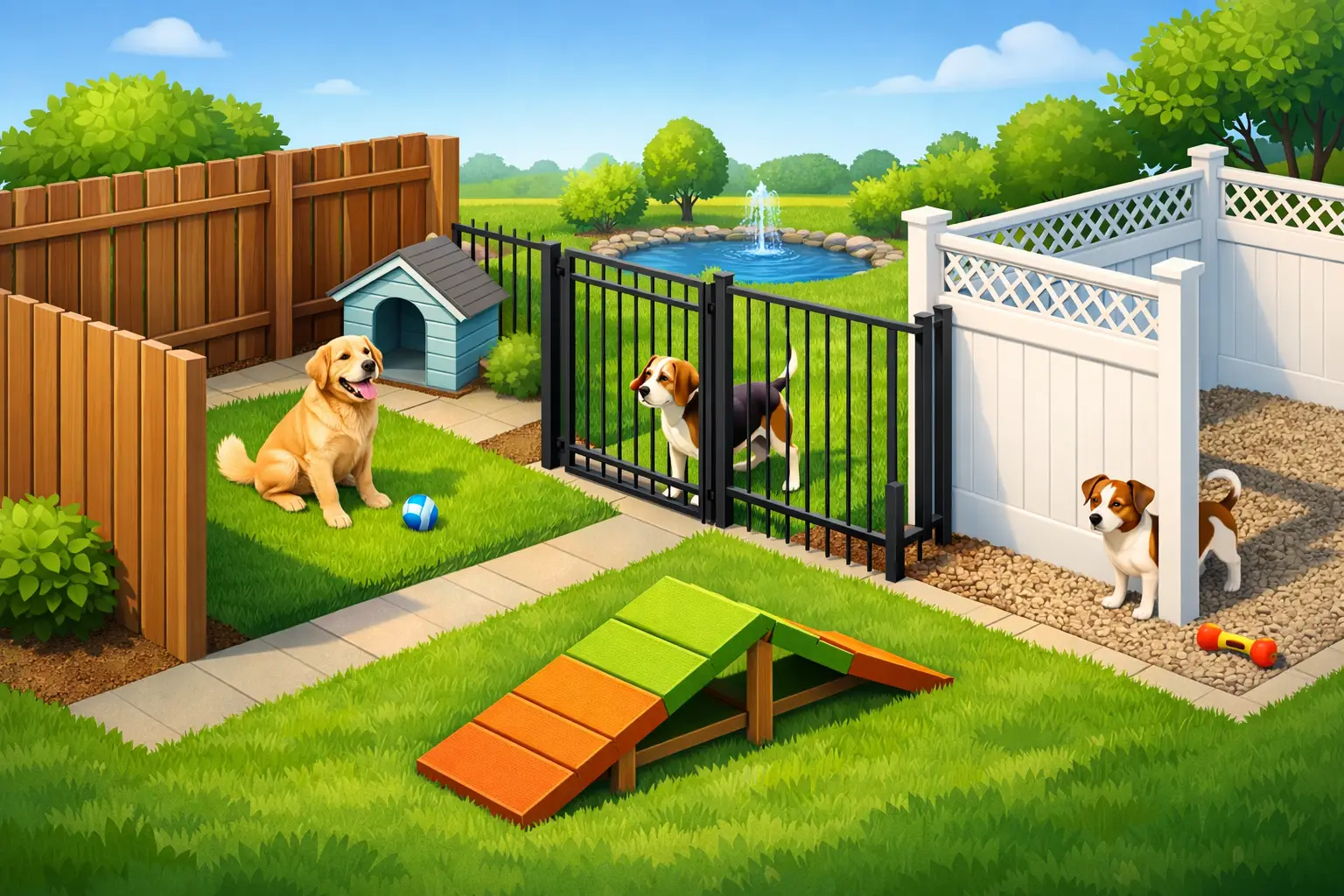
A fence can look great from the street and still be the wrong choice for a determined dog. Gaps at the bottom, rails that create a climbing route, weak gate latches, and low corners can turn a backyard into an escape risk. The best fence styles for pets protect your animal without sacrificing the privacy, appearance, and long-term value you want from your property.
For Oklahoma City homeowners, the right answer often comes down to your pet’s size, energy level, habits, and the condition of the yard itself. A calm small dog needs something very different from a large breed that jumps, digs, or charges the fence line when a squirrel runs by.
Best Fence Styles for Pets: Start With Behavior
Before choosing a material, consider how your pet behaves outside. Height matters, but it is not the only factor. A five-foot fence may contain one dog with ease while another clears it, digs below it, or works at a loose gate until it opens.
Dogs that jump or climb generally need a six-foot privacy fence with a smooth interior face. Avoid horizontal rails on the yard side when possible, since they can act like steps. For dogs that dig, the fence installation should address the bottom edge with proper grading, secure post placement, and, when needed, a buried barrier or reinforced apron.
Dogs that react to people, pets, or traffic may do better with limited visibility. A solid fence reduces the visual triggers that can lead to constant barking, running the perimeter, or repeated impact against the panels. On the other hand, a social dog that does not challenge boundaries may do well with a more open style.
Wood Privacy Fencing for Active Dogs
Wood privacy fencing remains one of the strongest choices for households with medium or large dogs. It creates a clear visual boundary, gives the backyard a private feel, and can be built at a height that fits the dog and local requirements. It also works well with many Oklahoma homes, from established neighborhoods to newer suburban properties.
A properly built wood fence can handle daily use, but quality installation is what makes the difference. Posts need to be set securely, panels need consistent spacing, and the bottom line needs to follow the grade without leaving tempting gaps. A good gate should be framed to resist sagging and fitted with dependable hardware.
Wood does require maintenance. Oklahoma sun, rain, wind, and shifting temperatures can dry, fade, and wear on unprotected boards. Periodic staining or sealing helps extend the life of the fence and keeps the yard looking cared for. If your dog likes to scratch or lean against the fence, a sturdy construction and regular inspections are worth the effort.
Vinyl Fencing for Low-Maintenance Containment
Vinyl fencing is a practical option for homeowners who want a clean, polished appearance without routine painting or staining. Solid vinyl privacy panels provide the same visual separation many reactive dogs need, and the smooth surface gives climbers fewer footholds than many wood designs.
This material is especially appealing when long-term upkeep is a concern. Vinyl will not rot like wood, and it is easy to clean when mud, grass clippings, or paw prints build up. For pet owners, that can mean a backyard boundary that stays presentable with less maintenance.
The trade-off is cost and repair flexibility. Vinyl often has a higher upfront price, and a hard impact can damage a panel or section. It is also essential that the posts and rails are installed correctly from the start. A fence that looks straight on day one but has weak structural support can become a problem after strong winds or years of backyard use.
Chain Link Fencing for Secure, Open Yards
Chain link is one of the most dependable choices when the main goal is secure containment at a practical price. It is common for large yards, side yards, and areas where homeowners want to preserve an open view. For many dogs, especially those that are not highly reactive, chain link provides a safe and durable boundary.
Choose the height carefully. Four-foot chain link may be enough for a small, calm dog, but larger or athletic dogs often need five or six feet. If your dog digs, the bottom edge needs extra attention. Chain link can be reinforced along the base so a pet cannot simply push under it where the ground is uneven.
Visibility is the main limitation. Some dogs become more worked up when they can see every person, dog, and passing vehicle. Privacy slats can help, though they change the appearance and add cost. Chain link is a smart fit when security and durability matter more than complete privacy.
Ornamental Metal Fencing for Calm Pets and Curb Appeal
Ornamental metal fencing offers a more refined look, particularly around front yards, pools, or landscaped areas. It is durable, clean-lined, and does not block the view of your property. For smaller pets or well-trained dogs that do not jump, climb, or squeeze through openings, it can be an attractive solution.
Still, this style is not right for every animal. Spacing between pickets must be narrow enough to prevent a small dog from slipping through. Large dogs may be able to jump shorter sections, and reactive pets can remain focused on activity beyond the fence. Metal fencing is often best when appearance is the priority and the pet’s behavior is already well understood.
Details That Matter More Than the Fence Material
The safest pet fence is not just a row of panels. It is a complete system built around the property. Gates deserve special attention because they are the most common weak point. A self-closing hinge, secure latch, and a gate that does not drag across the ground can prevent a stressful escape.
Grade changes also matter. A yard may appear level until a dog finds the one low spot beneath the fence. Sloped or uneven ground calls for careful layout so the fence follows the terrain without creating gaps. Trees, roots, drainage paths, and overgrown brush can affect placement as well. Clearing those obstacles before installation helps the fence sit where it should and gives crews room to build it correctly.
For dogs that dig, do not wait until the first tunnel appears. Tell your fence contractor about the behavior during the estimate. The installation plan can account for weak areas near corners, gates, shade trees, and soft soil. For dogs that jump, be direct about their breed, size, and jumping history. A fence that is too short is not a bargain if it has to be replaced later.
Choosing a Fence That Fits Your Home and Your Pet
There is no single best material for every backyard. Wood privacy fencing is often the best all-around answer for active or reactive dogs. Vinyl offers a polished, low-maintenance privacy option. Chain link provides strong containment for open yards and practical budgets, while ornamental metal can be a good fit for calm pets and homeowners focused on curb appeal.
The goal is a fence that holds up to daily use, fits the layout of your property, and gives you confidence when you let your pet outside. A professional estimate can identify grading issues, tree conflicts, gate needs, and the right height before work begins. Fowler’s Tree & Fence helps homeowners plan fences that are safe, clean, and built to do the job right the first time.
A secure backyard gives your pet room to run, rest, and play without turning every trip outside into something you have to worry about.


0 Comments