
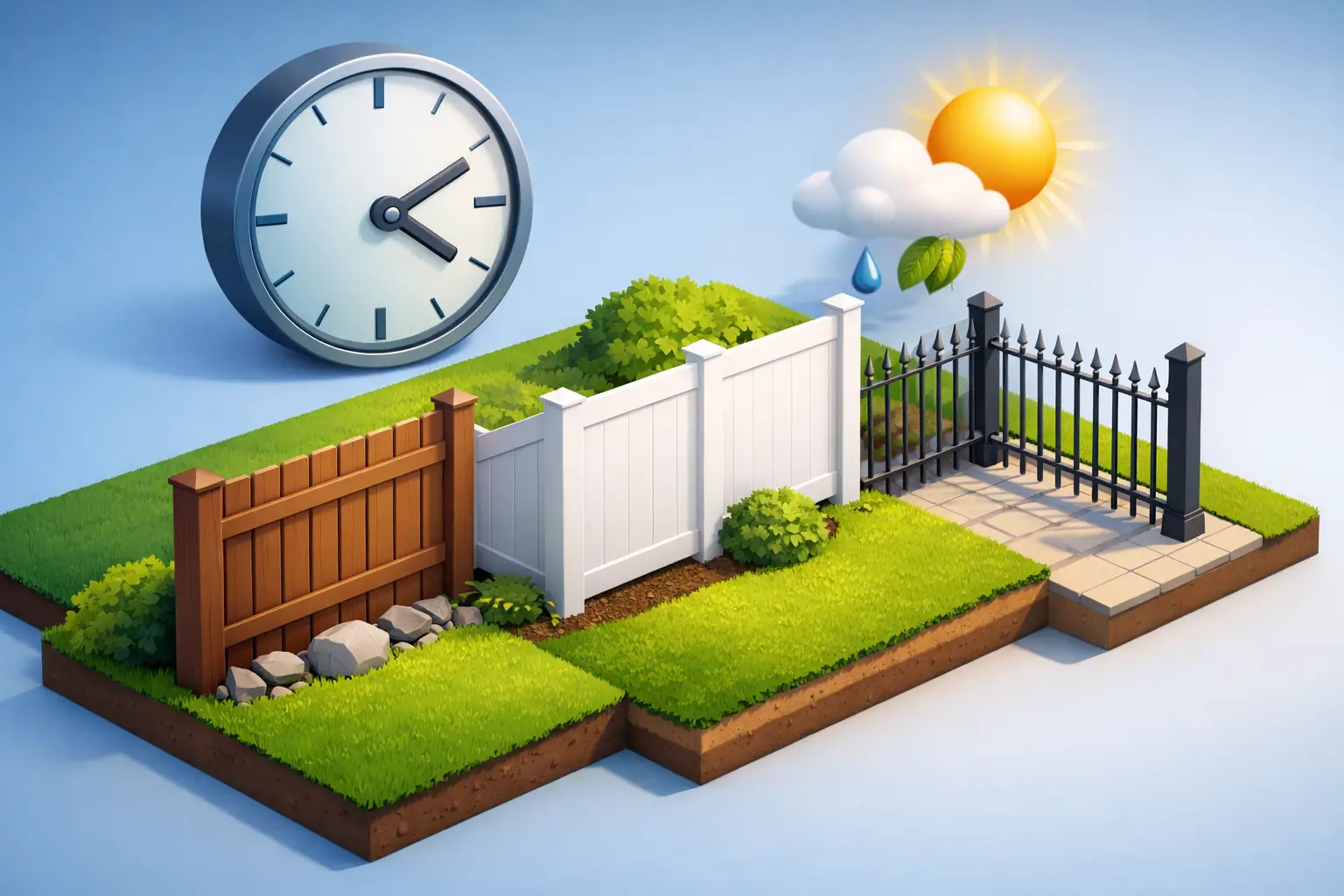
A fence can look solid one year and suddenly start leaning, warping, or pulling apart the next. If you are asking how long does a fence last, the honest answer is that it depends on the material, the installation, and how well it stands up to Oklahoma weather.
In the Oklahoma City area, fences deal with strong sun, wind, heavy rain, shifting soil, and the occasional storm that tests every post on the property. That means fence lifespan is not just about what you buy. It is also about how the fence is built, where it is installed, and what kind of wear it takes over time.
How long does a fence last by material?
Most residential fences last somewhere between 10 and 30 years, but that range is wide for a reason. Some fences fail early because of poor post setting or neglected maintenance. Others hold up for decades because the right material was installed correctly from the start.
Wood fences
A typical wood fence lasts around 10 to 20 years. In some cases, a well-built and well-maintained wood fence can make it past that range, but wood is naturally more vulnerable to moisture, insects, rot, and sun exposure than other materials.
Cedar is often chosen because it resists decay better than many other wood options, but even cedar will not last forever if posts are set poorly or boards stay wet for long periods. Regular staining or sealing helps protect the wood surface and slows down weather damage. Without that upkeep, a wood fence can age fast in Oklahoma heat and rain.
Chain link fences
Chain link fences often last 15 to 25 years or more. The metal mesh itself usually holds up well, especially when it has a protective coating. In many cases, the weak points are the posts, fittings, and areas where rust starts to form.
Chain link is practical and durable, but appearance matters too. For homeowners focused on privacy and curb appeal, chain link may last a long time while still feeling like the wrong fit for the property.
Vinyl fences
Vinyl fences commonly last 20 to 30 years. They do not rot, and they do not need painting or staining, which makes them attractive for homeowners who want lower maintenance.
That said, vinyl is not indestructible. It can become brittle over time, especially with constant sun exposure and temperature swings. Strong impact or storm debris can also crack panels. A vinyl fence may outlast wood in many situations, but repairs can be less forgiving when sections break.
Metal fences
Wrought iron and aluminum fences can last 20 years or much longer, depending on the product and the level of maintenance. Aluminum resists rust better and tends to be easier to maintain. Iron is strong and attractive, but if coating fails and rust is ignored, its lifespan can shorten.
Metal fencing is often chosen for security, visibility, and a clean finished look. It tends to hold structure well, but the finish and hardware still need attention over the years.
What affects how long a fence lasts?
Material matters, but it is only part of the story. Two fences made from the same product can age very differently based on how they were installed and what conditions they face.
Installation quality matters more than most people think
A fence is only as strong as its posts and framing. If posts are not set deep enough, spaced correctly, or secured properly, the fence may start leaning long before the boards or panels wear out.
This is one of the biggest reasons homeowners see early fence failure. From a distance, the fence may look fine at first. Then a few seasons pass, a storm rolls through, and the weak points show up fast. Good installation is what gives a fence the best chance at a full lifespan.
Oklahoma weather is hard on fences
Wind puts constant pressure on panels and posts. Summer sun dries materials out. Rain and standing moisture can speed up rot in wood and corrosion in metal. Clay-heavy soils can also shift with moisture changes, which affects post stability.
That is why local experience matters. A fence built for mild conditions in another region may not perform the same way here.
Maintenance can add years or take them away
A fence that gets basic care usually lasts longer than one that is ignored. For wood, that may mean staining, sealing, and replacing damaged boards before moisture spreads deeper into the structure. For metal, it may mean addressing rust early. For any material, it means keeping an eye on loose hardware, leaning sections, and drainage issues around the posts.
Homeowners do not always need constant maintenance, but waiting too long to fix small problems usually leads to larger repairs.
Trees and roots can shorten fence life
This factor gets overlooked all the time. Nearby trees can drop limbs, scrape fence lines during wind, trap moisture, and push on posts or panels as roots expand. Overgrown branches also create shade and airflow issues that keep fences damp longer after rain.
That is one reason it helps to work with a company that understands both fencing and tree care. In some yards, the fence problem is not only the fence.
Signs your fence is nearing the end
Sometimes the question is not how long should a fence last, but whether your current fence still has enough life left to justify repairs.
A few damaged boards or one loose gate do not always mean replacement is necessary. But if you are seeing widespread leaning, repeated post movement, rot at the base, cracked rails, rusted connections, or multiple areas failing at once, the fence may be reaching the end of its useful life.
Appearance matters too. A fence can still be standing while no longer doing its job well. If privacy is gone, security is compromised, or the fence is dragging down the look of the property, replacement may make more sense than ongoing patchwork.
Repair or replace?
This is where honesty matters. Not every aging fence needs to be torn out, but not every old fence is worth saving either.
If the structure is mostly sound and the damage is limited to a section or a few components, repair can be the smarter option. If the posts are failing across the fence line, the wood is rotting in multiple places, or storm damage exposed deeper structural issues, replacement is often the better long-term investment.
Paying for repeated small fixes on a fence that is already worn out can cost more than starting over with a properly built system. The right call depends on the age of the fence, the cause of the damage, and how much solid structure is still there.
How to get the longest life from a new fence
If you are replacing an old fence, lifespan starts with smart choices at the beginning. Pick a material that fits your goals, not just your budget on day one. Wood may have a lower upfront cost and a classic look, but it usually needs more upkeep. Vinyl and some metal options may cost more initially, but they can reduce maintenance over time.
Just as important, make sure the installation is done right. Proper post depth, sound framing, clean alignment, and attention to drainage all play a role in how long the fence holds up. This is not the kind of job where shortcuts stay hidden for long.
It also helps to think about the full property. If low-hanging limbs, heavy brush, or root pressure are already working against the fence line, those issues should be addressed too. A good fence installed next to unmanaged tree problems can still wear out early.
So, how long does a fence last in Oklahoma City?
For most homeowners, a realistic expectation is about 10 to 20 years for wood, 15 to 25 years for chain link, and 20 to 30 years for vinyl or certain metal fences. But those numbers are not guarantees. Local weather, tree exposure, soil movement, and build quality can shift that timeline in either direction.
The better question is not just how many years a fence can last. It is whether the fence is built to handle your yard, your needs, and the conditions it will face year after year. That is where good workmanship makes the difference.
At Fowler’s Tree & Fence, we see this up close. The fences that last are the ones installed with care, built for local conditions, and supported by the kind of property maintenance that keeps small problems from turning into expensive ones.
If your fence is starting to lean, age, or fail in sections, now is a good time to have it looked at before the next storm season makes the decision for you. A solid fence should give you security, privacy, and peace of mind, not one more thing to worry about in the backyard.


0 Comments