
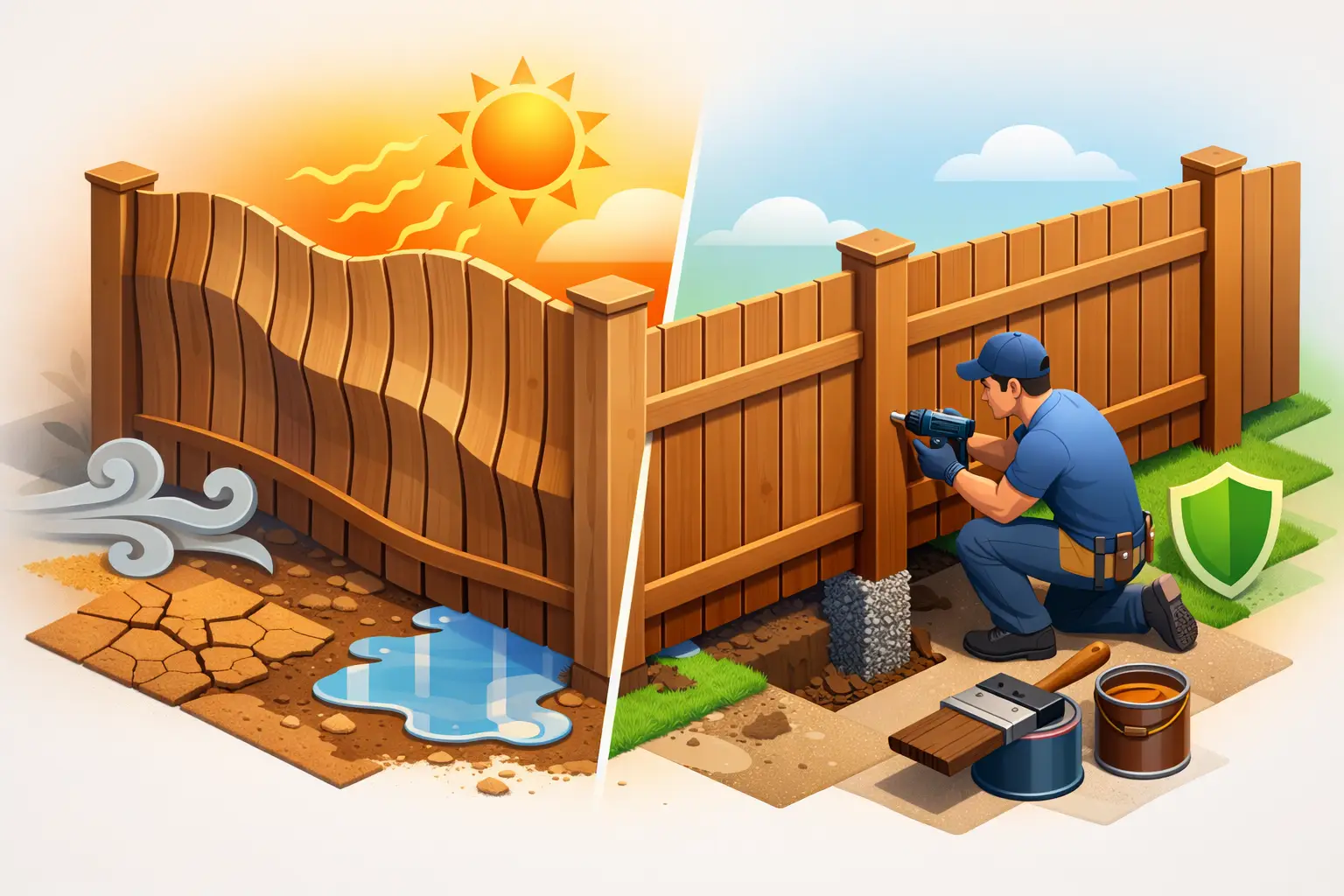
A fence can look straight when it is installed and start showing trouble one hard Oklahoma summer later. Boards cup outward, rails sag, gates drag, and sections that once lined up neatly begin to lean. Understanding the top causes of fence warping helps homeowners act before a small issue turns into a fence that needs major repair or replacement.
Warping is not always a sign that a fence was poorly built, but it is rarely something to ignore. Wood is a natural material that responds to moisture, heat, pressure, and movement in the ground. When those forces are not accounted for during installation or maintenance, the fence begins to show it.
The Top Causes of Fence Warping
Moisture that enters and leaves the wood
Wood fencing expands when it absorbs moisture and shrinks as it dries. That cycle happens naturally, but frequent swings can cause boards to twist, cup, bow, or split. Rain, sprinkler overspray, poor drainage, and wet soil held against the bottom of a fence all add moisture where it does the most damage.
The problem is often not one rainy day. It is repeated wet-and-dry exposure over months and years. A board may dry faster on its sunny face than on the shaded side, causing uneven movement through the wood. That imbalance pulls the board out of shape.
Fence staining or sealing can slow moisture absorption, but it cannot correct a drainage problem. If water routinely collects along the fence line, the site needs attention along with the fence itself. Keeping soil and mulch from being piled against boards also helps the lower section dry properly.
Oklahoma heat and direct sun
Central Oklahoma weather puts fences through a demanding cycle. Intense sun and summer heat can quickly dry exposed boards, especially on west- and south-facing fence lines. Then a storm brings moisture back into the wood. That constant expansion and contraction is one of the most common reasons wood fencing loses its straight, even appearance.
Sun exposure also breaks down unprotected finishes. Once stain or sealant wears thin, the wood absorbs water more easily and dries less evenly. Dark stains can offer a finished look, but they may also make boards run hotter in direct sunlight. The right finish depends on the fence material, its location, and how much sun it receives.
A few slightly bowed boards may be replaceable. Widespread warping across the same exposed side of the yard may point to aging finish, lower-grade material, or a fence that needs more than a quick board swap.
Improper spacing and installation
A fence needs room for normal wood movement. When boards are installed too tightly together, they can push against one another as humidity rises. The pressure may force boards to bend, crack, or pull fasteners loose. Spacing that is too wide, on the other hand, can leave the fence looking uneven when dry boards shrink.
Fastener placement matters as well. Nails or screws installed too close to an edge can split the board. Fasteners that are too short, poorly spaced, or not suitable for outdoor use may loosen as the wood moves. Once boards no longer sit firmly against their rails, they are more likely to twist in wind and weather.
Straight boards will not stay straight if the rails and posts behind them are out of line. Professional fence installation starts with solid layout, correctly set posts, level rails, and consistent board spacing. The visible pickets get the attention, but the frame is what keeps the fence stable.
Weak, shifting, or rotted fence posts
Sometimes what looks like warped fencing is actually a structural issue below ground. Posts can lean when soil becomes saturated, compacted unevenly, or disturbed by erosion. In clay-heavy areas, soil expansion and contraction can move posts over time. A fence section then goes out of square, placing pressure on rails and boards that were never meant to carry it.
Wood posts are also vulnerable to rot at or below ground level. The upper part of the post may look acceptable while the buried portion has softened and lost its strength. As the post shifts, boards can bow, gates can stop latching, and an entire run may begin to lean.
Replacing a few warped pickets without addressing a failing post usually delays the real repair. A qualified fence crew should inspect the posts, rails, and concrete setting before recommending the right scope of work.
Poor-quality, immature, or badly stored lumber
Not all fence boards begin at the same level of stability. Lumber that has not dried properly before installation is more likely to move significantly after it is installed. Lower-grade boards can contain more knots, grain irregularities, and natural defects that make twisting more likely.
Storage before installation matters too. Boards left directly on wet ground, exposed to repeated rain, or stacked without airflow can take on moisture unevenly. Installing those boards before they stabilize creates a higher chance of visible movement later.
Cedar, treated pine, and other common fence materials each have different strengths, costs, and maintenance needs. There is no material that is completely immune to weather. The better question is whether the material suits the property, budget, sun exposure, and desired maintenance schedule.
Storms, wind, and nearby tree pressure
High winds can flex a fence far beyond what it experiences on a normal day. Even if no section falls, repeated wind pressure can loosen fasteners, rack a fence line, and strain boards against rails. Storm debris and fallen limbs may leave obvious damage, but branches rubbing against a fence can cause gradual damage that is easier to miss.
Tree roots can also affect fence alignment. Roots near a fence line may lift soil, interfere with post placement, or contribute to uneven movement over time. When a mature tree and fence occupy the same tight space, it is wise to consider both systems together rather than treating each problem separately.
This is where a company that handles both tree work and fencing can be especially useful. Fowler’s Tree & Fence can assess whether overgrown limbs, storm damage, roots, drainage, or the fence structure itself is driving the problem, then help homeowners plan the work in the right order.
Heavy gates and hardware problems
Gates put more stress on posts than any other part of a typical residential fence. A gate that is too heavy for its frame, has undersized hinges, or is attached to a weakening post will sag over time. That sag can pull adjoining rails out of level and make nearby pickets appear warped.
A dragging gate is not just an inconvenience. It can signal that the hinge post is moving or that the gate frame is no longer square. Catching the issue early may allow for a targeted repair. Waiting until the gate will not close often means more of the fence line has been affected.
When Warped Fence Boards Can Be Repaired
A few individual boards that have cupped, twisted, or cracked can often be replaced if the posts and rails remain sound. This is common after a storm or on one side of an older fence that receives more afternoon sun. A repair can restore appearance and help protect the rest of the structure from further strain.
Repair becomes less practical when warping appears across many sections, posts are leaning, rails are decaying, or the fence has reached the end of its service life. In those cases, repeatedly replacing boards can cost more over time than rebuilding the affected run correctly.
An in-person inspection is the best way to separate a cosmetic issue from a structural one. Homeowners should be wary of anyone who recommends a full replacement without checking posts and drainage, but they should also be cautious about a quick patch that ignores a leaning foundation.
Protecting a New or Repaired Fence
The best defense against fence warping is a fence built for the conditions around it. That means properly set posts, quality materials, appropriate spacing, exterior-rated fasteners, and drainage that keeps standing water away from the base. A stain or sealant applied on the right schedule adds another layer of protection, particularly on fence lines exposed to full sun.
Regular checks after major storms are worthwhile. Look for loose pickets, popped fasteners, standing water, leaning posts, and gates that no longer latch easily. These signs are easier and less expensive to address before wind, rain, and heat compound the damage.
A straight fence does more than improve curb appeal. It keeps pets and children safely contained, maintains privacy, and gives the entire property a cared-for look. If boards are bending or a fence line is beginning to move, getting a clear assessment now can help protect the yard for years to come.


0 Comments