
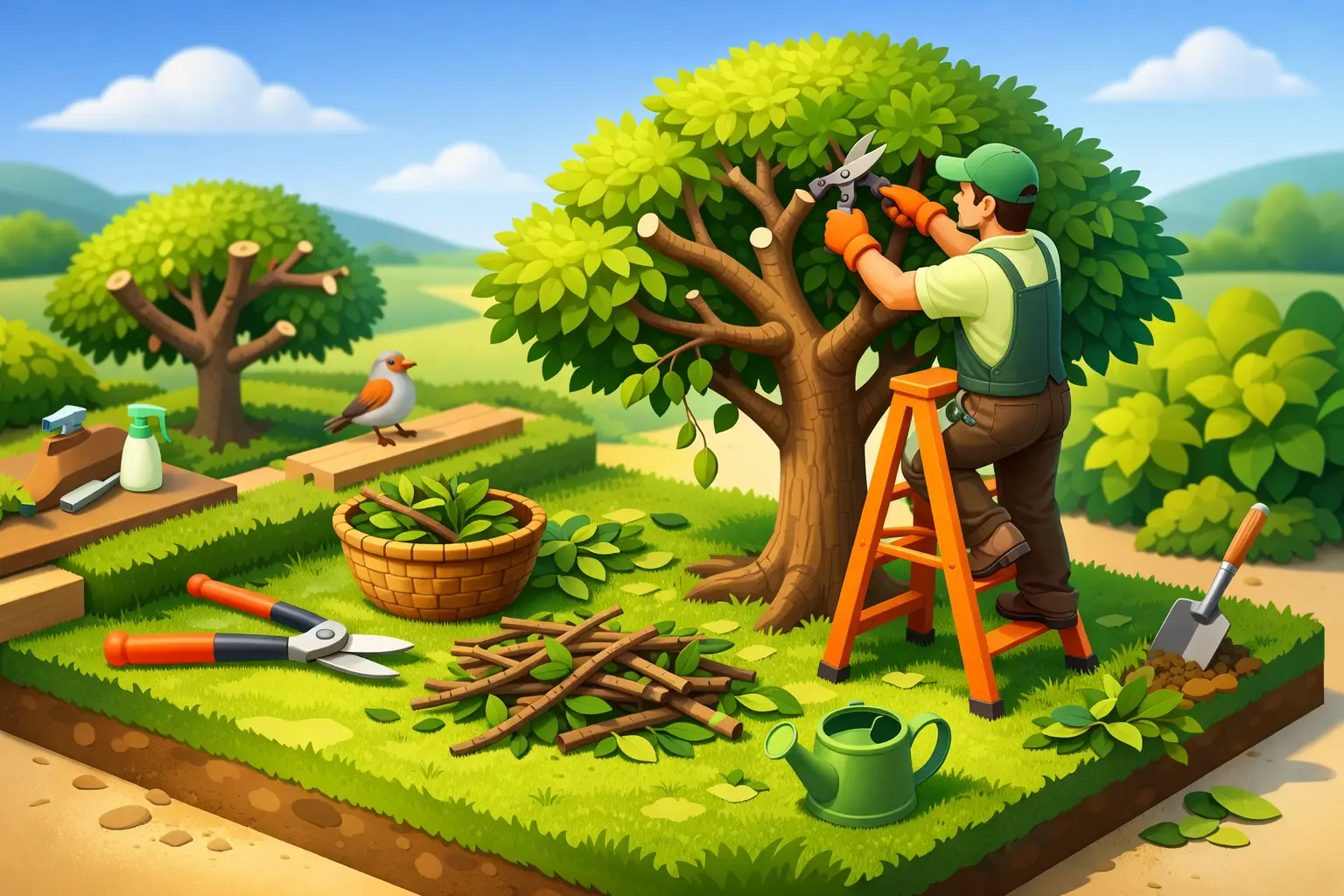
A tree can look full and green from the street and still have problems developing overhead. Dead limbs, crowded branches, weak attachments, and storm-stressed growth often build up slowly. That is why tree pruning for healthy growth is not just about appearance – it is about protecting the structure, safety, and long-term life of the tree.
For homeowners in the Oklahoma City area, that matters more than most people realize. Our weather can swing from high winds and ice to intense summer heat, and trees take that stress year after year. A pruning job done at the right time can reduce risk, improve air flow, encourage stronger growth, and help prevent larger problems that cost more to fix later.
Why tree pruning for healthy growth matters
Healthy trees do not always grow in a healthy way. Sometimes branches cross and rub, opening wounds in the bark. Sometimes dense canopies trap moisture and reduce light in the interior of the tree. In other cases, fast-growing limbs stretch too far from the trunk and become more likely to split during storms.
Pruning helps correct those issues before they turn into hazards. Removing dead, diseased, damaged, or poorly attached limbs allows the tree to put energy into stronger growth. It can also improve clearance over roofs, driveways, fences, and walkways where overgrowth becomes a safety concern.
There is a balance to it, though. Too little pruning leaves structural problems in place. Too much pruning can stress the tree, expose it to sun damage, or trigger weak regrowth. That is one reason homeowners often call in a professional crew instead of guessing where cuts should go.
What professional pruning is really meant to do
A lot of people think pruning means cutting a tree back until it looks smaller and neater. Good pruning is more precise than that. The goal is to improve the tree without taking away what makes it healthy in the first place.
That usually means identifying limbs that are dead, hanging, cracked, diseased, overcrowded, or growing in the wrong direction. It can also mean shaping younger trees so they develop a stronger structure early on. Mature trees often need a different approach than younger ones because you are managing weight, balance, and risk rather than trying to force new shape.
Every tree species responds a little differently, and every yard brings its own conditions. A large oak near a roofline, for example, should not be treated the same way as a smaller ornamental tree in an open front yard. The right plan depends on the species, age, health, season, and how close the tree is to homes, fences, and utility areas.
Signs your tree may need pruning
Some warning signs are obvious. If you can see dead limbs, broken branches, or low growth scraping a roof, the tree likely needs attention. The same goes for limbs hanging over a fence line, blocking sight lines near a driveway, or touching the house during windy conditions.
Other signs are easier to miss. A canopy that has become unusually dense may be limiting air circulation. Branches that grow tightly together can start competing for space and create weak junctions. If a tree looks lopsided after a storm, or if one side carries much more weight than the other, pruning may help restore better balance.
Homeowners also tend to notice practical problems first. Maybe the backyard stays darker than it should. Maybe gutters keep filling with small dead twigs. Maybe storm season has you looking up at a heavy limb over the driveway and wondering how secure it really is. Those are all reasonable times to have a tree evaluated.
The best time for tree pruning for healthy growth
Timing matters. In many cases, pruning during dormancy is ideal because the tree is under less stress and the branch structure is easier to see. That said, not every pruning need can wait for the perfect season. Broken or hazardous limbs should be removed promptly, and some species benefit from timing that avoids disease pressure or excessive sap flow.
In Oklahoma, weather can force the issue. After strong winds, ice, or severe thunderstorms, damaged limbs often need immediate attention to prevent further splitting or property damage. Waiting too long can turn a manageable pruning job into an emergency removal.
This is another area where experience matters. The right time depends on why the tree is being pruned, what kind of tree it is, and how much needs to come off. Good tree care is not one-size-fits-all.
Why improper pruning causes bigger problems
Bad pruning can set a tree back for years. Topping, random limb cutting, or taking off too much canopy at once often creates weak regrowth and extra stress. It may make the tree look trimmed in the short term, but it can actually increase the chance of breakage later.
Poor cuts also leave trees more vulnerable to decay and insects. If a branch is removed incorrectly, the wound may not close the way it should. Over time, that can lead to internal damage that is hard to spot from the ground.
There is also the safety side. Large limbs over homes, fences, and vehicles are not something to handle casually. Ladder work, chainsaws, and overhead cutting all carry real risk. For many homeowners, the safest choice is to have an insured and bonded crew handle the work with the right equipment and a clear cleanup plan.
How pruning supports curb appeal and property protection
Healthy growth is the main goal, but appearance matters too. A properly pruned tree usually looks cleaner, more balanced, and more in scale with the rest of the property. That can make a noticeable difference in the overall look of the yard.
More importantly, pruning can help protect the things around the tree. Branches that grow too close to fences can cause wear and storm damage. Limbs over a roof can scrape shingles or drop debris into gutters. Heavy growth near play areas, patios, and driveways can create both nuisance and safety issues.
When pruning is handled thoughtfully, homeowners get both benefits – a better-looking tree and fewer risks around the property. That practical value is a big reason many people schedule pruning before problems become urgent.
What to expect from a professional pruning service
A good pruning visit should start with a clear look at the tree and the surrounding area. The crew should consider health, structure, storm risk, access, and what needs to be protected nearby. From there, the work should focus on the cuts that actually improve the tree, not just remove random branches.
Clean execution matters. So does cleanup. Tree work can get messy fast, and homeowners should not be left with brush piles, scattered debris, or damaged lawn areas after the job is done. A dependable crew plans for safe removal, careful handling, and a clean finish.
That straightforward approach is what homeowners want from a local service company. At Fowler’s Tree & Fence, the standard is simple: safe, clean, and done right the first time. When you are dealing with overgrown or storm-stressed trees, that kind of reliability matters.
When pruning is enough and when it is not
Sometimes pruning solves the issue. Sometimes it only buys time. If a tree is severely diseased, structurally compromised, hollow, or leaning due to root failure, trimming branches may not be the right fix. In those cases, removal may be the safer option.
That is why honest assessment matters. Not every tree needs aggressive work, and not every struggling tree should be preserved at all costs. The right recommendation depends on the condition of the tree, the level of risk, and how close it is to the house, fence, vehicles, or neighboring property.
For homeowners, the best outcome is clarity. You want to know whether the tree can be improved with pruning, whether it should be monitored, or whether it has become a liability. Clear answers help you make decisions before weather and time make them for you.
A healthy tree adds shade, beauty, and value to a property for years. But healthy growth does not happen by accident. With the right pruning at the right time, you give the tree a better chance to stay strong, safe, and worth keeping.


0 Comments