
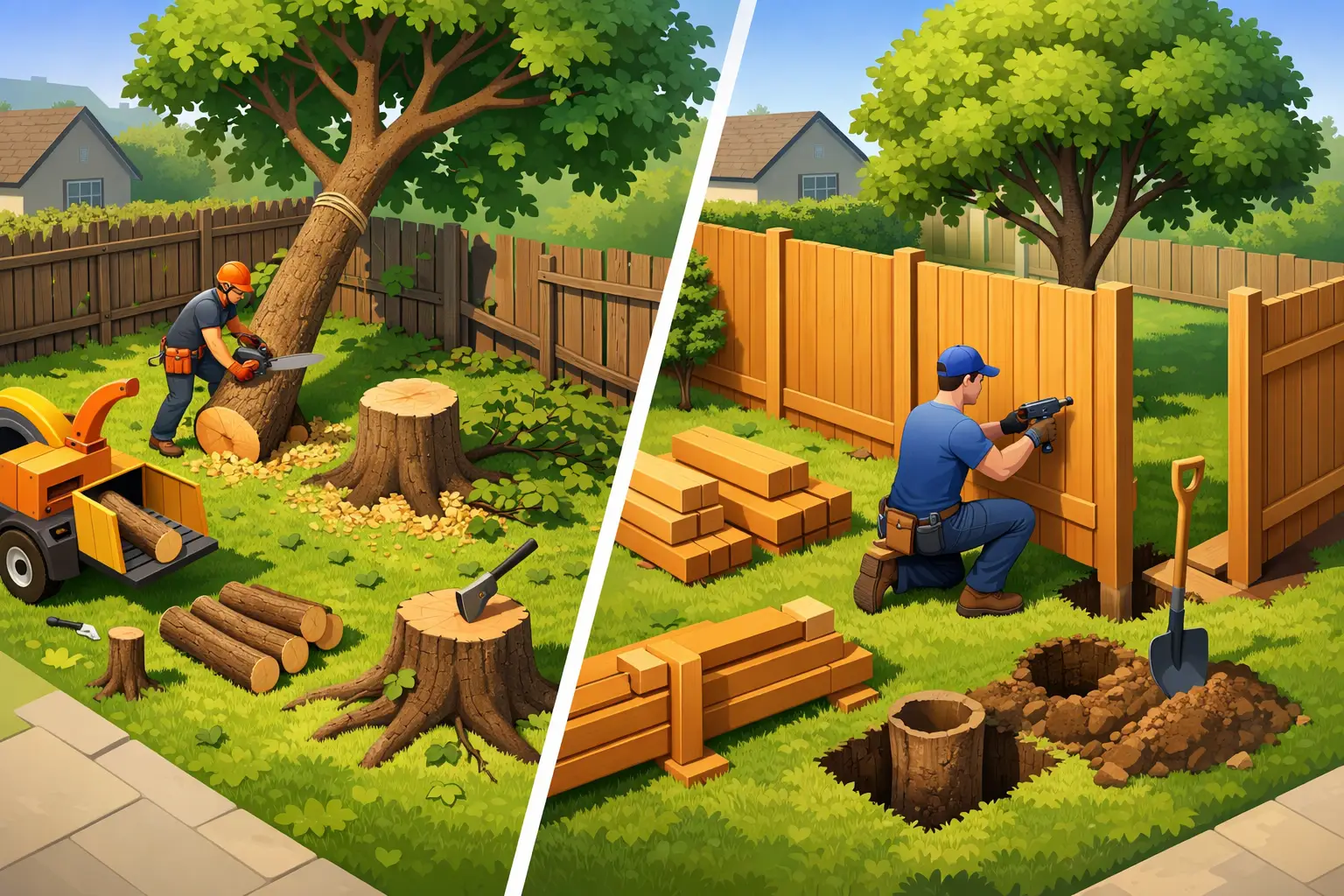
A leaning fence line, a crowded backyard, and a mature tree can turn one home improvement project into two. In many cases, tree removal before fence replacement is the safer, cleaner order of work. Removing a hazardous, declining, or poorly placed tree first protects the new fence from damage and gives the installation crew room to build a stronger result.
That does not mean every tree near a fence needs to come down. Healthy trees can often stay, especially when the fence design and post locations can work around established roots and branches. The right decision depends on the tree’s condition, its distance from the fence, the type of fencing planned, and what the yard needs to handle Oklahoma weather.
When Tree Removal Before Fence Replacement Is the Right Call
A fence is only as dependable as the ground, posts, and clearance around it. If a tree is dead, storm-damaged, heavily leaning, or dropping large limbs near the property line, replacing the fence first can create an expensive problem later. A falling limb can crack panels, bend metal rails, knock posts out of line, or damage a gate that was just installed.
Removing the tree first also gives the crew clear access to the fence line. That matters when old panels, brush, low limbs, and surface roots are all competing for the same narrow space. With the tree out of the way, it is easier to remove the old fence, set posts where they belong, maintain a straight line, and avoid forcing the new fence around an obstacle that may not be there next year.
Tree removal is usually the better first step when any of these conditions apply:
- The tree is dead, visibly declining, split, hollow, or leaning toward the fence or home.
- Large limbs hang over the planned fence line and would remain a regular impact risk.
- Roots have pushed up the old fence, shifted posts, or made proper post placement difficult.
- The tree sits so close to the line that safe removal later would require working over or through a new fence.
- Storm damage has left the tree unstable or created a time-sensitive safety concern.
For Oklahoma City homeowners, wind is a major part of the equation. A tree that has survived for years can still become a threat after saturated soil, high winds, ice, or repeated limb loss. If the tree is already questionable, a new fence should not become the thing that raises the cost and difficulty of dealing with it later.
Why the Order of Work Matters
Tree work involves equipment, falling debris, controlled rigging, and access paths for hauling away wood. Even careful removal can disturb a tight work area. Completing that work before fence replacement helps prevent avoidable damage to fresh materials and keeps the jobsite more organized.
There is also a practical cost consideration. If a fence is installed first, tree crews may need to use more time and more controlled methods to protect it during removal. In some cases, a section of new fencing may need to be temporarily removed or repaired afterward. Starting with the tree often avoids those extra steps.
The same applies to stump grinding. A stump near the fence line can prevent a post from being placed at the correct depth or location. Grinding it before installation gives the fence crew a more usable area to work with. Once the stump is gone, the crew can assess the soil, fill and compact the area as needed, and plan the fence line without guessing around hidden roots.
This order can also improve the finished appearance. Instead of fitting a fence around an oversized stump, damaged root flare, or low-hanging branch, homeowners can create a cleaner boundary that looks intentional from the start.
When It May Make Sense to Keep the Tree
Not every tree next to a fence is a removal candidate. A healthy, well-maintained tree can provide shade, privacy, and character to a backyard. If it has a stable trunk, sound branch structure, and enough clearance from the proposed fence, there may be no reason to remove it.
In that situation, selective pruning may be the better solution. Raising low limbs, removing deadwood, and reducing branches that rub against the fence can protect both the tree and the new installation. Pruning should be planned carefully, though. Cutting too much from a healthy tree can create stress and leave it more vulnerable to disease, sun exposure, or future limb failure.
Fence design matters, too. A minor adjustment to a gate location or a small change in the line may preserve a valuable tree without compromising the function of the fence. This is especially true when the tree is well inside the yard rather than directly on the property boundary.
The key is not to let a short-term fence decision create a long-term tree problem. A tree with roots that will continue lifting soil near posts, or branches that will keep striking panels every storm season, deserves an honest assessment before materials are ordered.
Roots, Posts, and Property Lines Need a Careful Look
Roots are one of the most common reasons a fence replacement becomes more complicated than expected. Large surface roots can block a post hole, redirect water, and make it hard to set a post at the proper depth. Cutting major roots may also weaken the tree or affect its stability, particularly if the tree is mature and close to the planned fence line.
There is no one-size-fits-all rule for roots. A small root can sometimes be worked around. A large structural root may call for moving the post, changing the panel layout, or reconsidering the tree’s future. The goal is not simply to get a hole dug. It is to build a fence that stays straight and secure while avoiding unnecessary damage to a tree that will remain in the yard.
Property lines deserve the same attention. A tree trunk near a boundary does not automatically mean the tree belongs to both neighbors. Before removal or fence construction, confirm the actual property line and discuss access with nearby neighbors when appropriate. Clear communication can prevent surprises, especially when equipment needs temporary space on the other side of the fence.
If a tree is protected by local rules, part of a homeowners association requirement, or located near utility lines, those details should be addressed before work begins. Professional crews can identify safety concerns and help homeowners understand what needs to happen before the project moves forward.
Plan the Job as One Outdoor Project
The smoothest projects start with a full look at the yard instead of treating the tree and fence as unrelated jobs. During an estimate, the contractor should consider tree condition, branch clearance, stump location, access for equipment, drainage, existing fence damage, and the final layout for gates and posts.
A coordinated plan often follows a straightforward sequence: assess the tree and fence line, remove or prune the tree as needed, haul away debris, grind the stump when it affects the installation area, clear and prepare the line, then install the replacement fence. This approach reduces repeated trips through the yard and helps keep the work area cleaner.
Homeowners should also think about what they want the space to do after the project. A new privacy fence may change how wind moves through the yard. Removing a large tree may increase afternoon sun, affect a garden bed, or expose an area that needs new planting. These are not reasons to avoid necessary removal, but they are good reasons to plan the finished yard instead of focusing only on the immediate problem.
Fowler’s Tree & Fence can evaluate both sides of the project in one visit, helping homeowners avoid the hassle of coordinating separate crews around the same backyard. That means one team can address hazardous trees, brush, stumps, and fence replacement with safety, timing, and cleanup in mind.
A new fence should feel like a lasting improvement, not something that has to be repaired after the next storm or tree service visit. If a tree is crowding, damaging, or threatening the fence line, address it first and give the replacement fence the clear, stable foundation it deserves.


0 Comments