
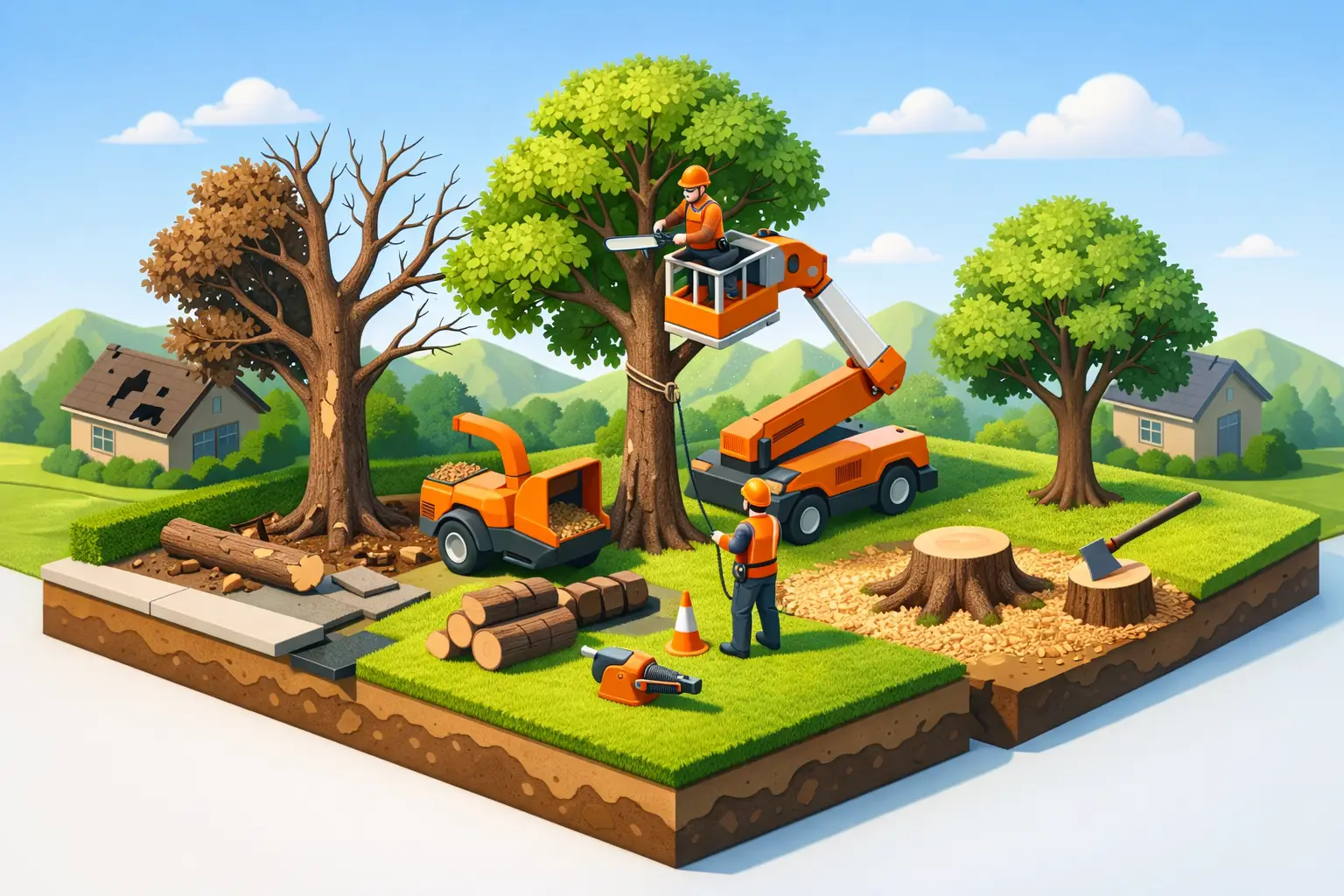
A tree usually does not go from healthy to dangerous overnight. More often, homeowners notice small changes first – a lean that looks worse than it did last year, large dead limbs over the driveway, roots lifting near a patio, or storm damage that never fully recovers. If you are asking when should a tree be removed, the answer comes down to safety, condition, location, and whether the tree can still be managed without creating a bigger problem later.
For many Oklahoma City homeowners, that decision is not just about the tree itself. It is about protecting the roof, fence, vehicles, power lines, and the people who use the yard every day. Removal is not always the first option, but there are times when it is the right one.
When should a tree be removed instead of trimmed?
Trimming can solve a lot of common tree problems. It can reduce overgrowth, remove dead branches, improve clearance, and help a tree look better and function better. But trimming has limits. If the trunk is compromised, the root system is failing, or the tree has outgrown its space in a way that creates ongoing risk, cutting a few limbs back may only delay the issue.
A good rule of thumb is this: if the tree cannot be made reasonably safe and stable through pruning alone, removal needs to be on the table. That is especially true when a tree is close to a home, over a fence line, or in a spot where failure would cause expensive damage.
This is where experience matters. Some trees look rough but are still structurally sound. Others still have green leaves and seem fine from a distance, while the trunk or roots are already in serious decline.
Clear signs a tree may need to come down
One of the biggest warning signs is major deadwood. A few dead branches here and there are common, especially after heat, drought, or storms. But when large scaffold limbs are dead, the top canopy is thinning out, or entire sections are no longer leafing out, the tree may be declining beyond recovery.
A split trunk is another serious concern. Cracks that run deep into the main stem or major branch unions often mean the tree has already started to fail structurally. In Oklahoma windstorms, that kind of weakness can turn into a sudden emergency.
Leaning is more complicated. Some trees naturally grow at an angle and remain stable for years. What raises concern is a recent lean, a lean that keeps increasing, or one paired with exposed roots, cracked soil, or lifting ground on one side of the base. Those are signs the root plate may be shifting.
Fungal growth around the base can also point to internal decay. Not every mushroom means a tree is doomed, but visible fungus near the trunk flare or roots can indicate rotting wood below the surface. When decay affects the lower trunk or root system, the risk goes up fast.
Pest damage is another factor. Boring insects, severe infestation, and repeated stress can weaken a tree enough that removal becomes the safer choice. The same goes for hollow sections in the trunk. A cavity does not always mean immediate removal, but if too much structural wood is gone, the tree may no longer be dependable.
When should a tree be removed after storm damage?
Storm damage is one of the most common reasons homeowners in this area call for tree service. High winds, ice, and heavy rain can break limbs, split trunks, and destabilize root systems in a single night. Sometimes the damage is obvious. Other times, the tree survives the storm but is left with structural problems that show up later.
A tree should be evaluated for removal after a storm if it has a major split, hanging limbs, exposed or torn roots, or a canopy that lost a large percentage of its structure. If a tree is resting on a house, fence, or another tree, it needs professional handling right away.
There is also a middle ground after storms. Some damaged trees can be cleaned up and saved with careful pruning. Others are too compromised to trust long term. That is why quick, on-site assessment matters. Waiting too long can turn a manageable job into a hazard.
Location matters as much as condition
Even a tree that is not fully dead may need removal if it is planted in the wrong place. Trees growing too close to foundations, roofs, driveways, pools, patios, fences, or utility areas can create repeated maintenance problems and rising risk over time.
Roots can affect hardscapes, and low or heavy limbs can scrape roofs, block visibility, or hang over places where kids play and cars park. In a wide-open part of the property, a declining tree might be monitored for a while. In a tight side yard beside the house, that same tree may need to come down much sooner.
This is one of the biggest it-depends situations. A moderately compromised tree in the back corner of an acreage property is different from a moderately compromised tree hanging over a bedroom and a shared fence line. The level of urgency changes with the target underneath it.
Dead tree or declining tree?
Completely dead trees almost always need removal, especially if they are near structures or activity areas. Dead wood becomes brittle. Limbs drop easier. The trunk can hold for a while and then fail without much warning.
Declining trees are trickier. A tree does not have to be fully dead to become unsafe. If a tree has lost vigor year after year, shows major canopy thinning, has bark sloughing off, and keeps dropping large limbs, removal may be the more practical choice than repeated trimming.
There is also a cost question. Sometimes homeowners spend money pruning a tree every season just to keep it limping along in a poor location. In those cases, removal can be the better long-term decision for safety, appearance, and budget.
Can a tree be saved, or is removal the better call?
That answer depends on species, age, structure, and how much damage has already occurred. Some trees tolerate corrective pruning well. Others do not recover once decay or root failure sets in. Young trees with isolated issues are often better candidates for saving than mature trees with multiple structural problems.
The practical question is not just, can this tree stay up for now? It is, can it stay up safely and make sense to maintain over the next few years? If the answer is no, removal is often the smarter move.
For homeowners, peace of mind matters too. If a tree keeps you worried every time the wind picks up, it is worth having it evaluated before it becomes an emergency.
Why professional removal matters
Tree removal is not a small job, especially near homes, fences, sheds, power lines, or neighboring properties. The risk is not only in cutting the tree down. It is in understanding where the weight is, how damaged wood will react, how to control the fall, and how to clean up the site without leaving a mess behind.
That is why insured, experienced crews are so important. A proper removal plan protects the property and reduces the chance of avoidable damage. It also helps homeowners handle the next step, whether that means stump grinding, regrading the area, or preparing for a new fence or landscape update.
For local property owners, working with a dependable crew like Fowler’s Tree & Fence means the job gets handled with safety, speed, and cleanup in mind. That matters when you are dealing with a tree that is already creating stress.
The best time to act is before it becomes urgent
Many removals happen after a limb falls or a storm exposes a problem, but waiting for visible failure is not the best plan. If a tree is showing multiple warning signs, crowding your home, or becoming more unstable each season, early action usually gives you more control, a safer jobsite, and fewer surprise costs.
If you are unsure when should a tree be removed, trust what you are seeing and get it looked at. A tree does not have to be on the ground to be a problem. Sometimes the smartest move is taking care of it while the job is still straightforward, the property is still protected, and the fix is still on your terms.


0 Comments