
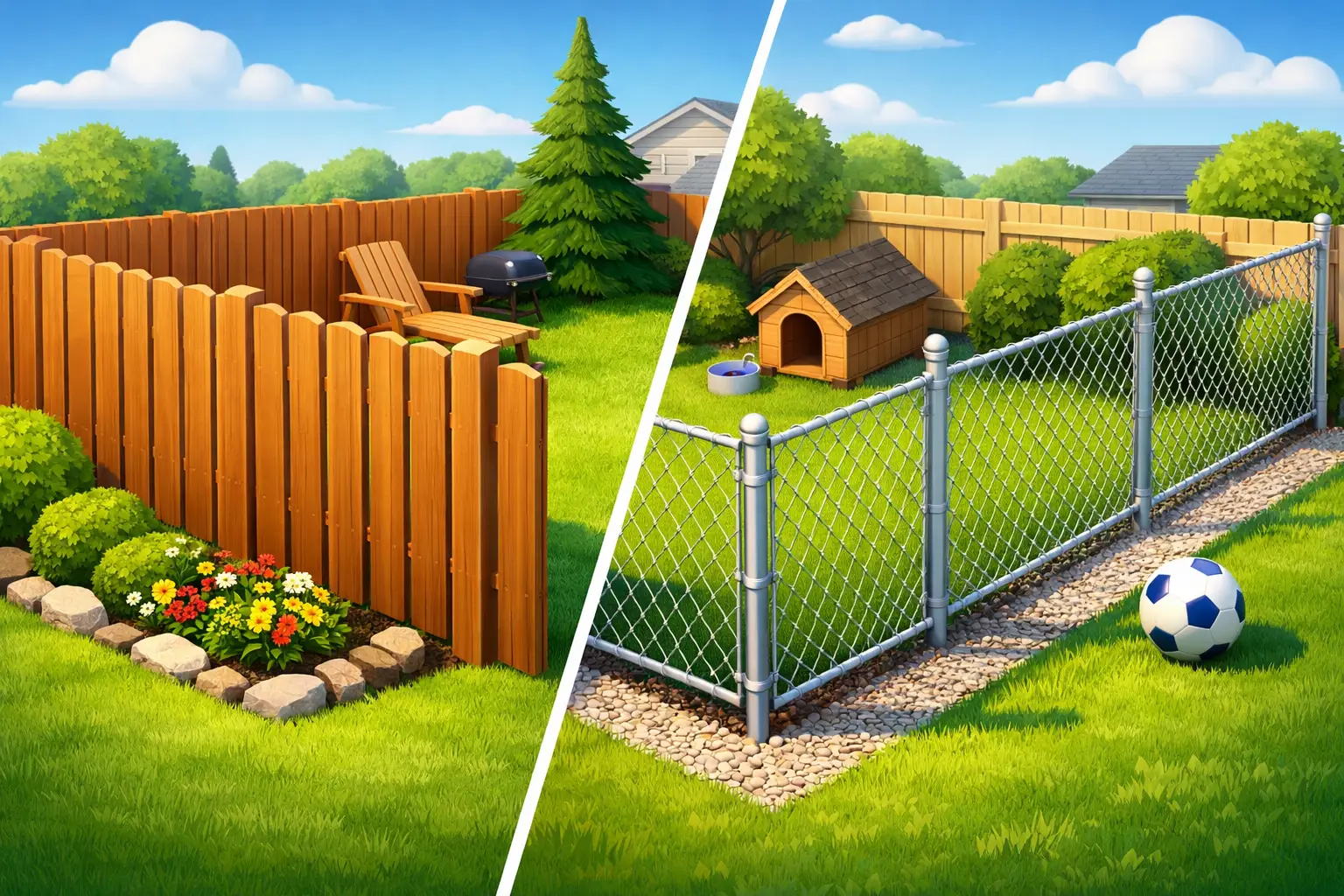
A new fence has to do more than mark a property line. It needs to handle Oklahoma wind, create the right level of privacy, work with your budget, and still look good after years of sun and rain. When homeowners weigh a wood fence vs chain link, the better choice usually comes down to how they use their yard – not simply which material costs less on day one.
Wood and chain link are both dependable fencing options when installed correctly. One offers a finished, private backyard feel. The other provides practical containment and visibility at a lower initial price. Here is how to make the choice with fewer surprises later.
Wood Fence vs Chain Link: The Main Difference
A wood fence is typically chosen for privacy, curb appeal, and a more defined outdoor living space. Solid wood panels or closely spaced pickets block views into the yard and can help create a quieter, more comfortable setting for children, pets, patios, and pools.
Chain link is built for function. Its open steel mesh creates a clear boundary, keeps pets contained, and lets homeowners see across the property. It is common around side yards, larger lots, rental properties, dog runs, and areas where security matters more than privacy.
Neither is automatically the right answer. A family that spends most evenings on the back patio may get far more value from wood. A homeowner fencing a large backyard for two dogs may prefer chain link because it covers more ground for the budget.
Privacy and Appearance
For most residential backyards, privacy is where wood clearly has the advantage. A six-foot wood privacy fence keeps neighboring windows, passing traffic, and nearby activity out of sight. It also creates a clean backdrop for landscaping, outdoor furniture, play areas, and gardens.
Wood gives homeowners more design options, too. Fence height, picket style, top caps, gates, stain color, and board layout can be selected to match the home and the neighborhood. A properly built wood fence feels like part of the property rather than a basic barrier.
Chain link does not provide privacy on its own. Privacy slats or screening can be added, but these materials change the look of the fence and can catch more wind. They also do not usually deliver the same finished appearance as a wood privacy fence.
That does not mean chain link looks out of place everywhere. Black vinyl-coated chain link can be a cleaner-looking option than traditional galvanized steel, especially around gardens, wooded lots, or pet areas. If you value an open view or do not need to block neighbors, its simplicity can be a benefit.
Upfront Cost and Long-Term Value
Chain link usually has a lower upfront cost than a wood privacy fence, particularly on long fence lines. The materials are efficient, installation can move quickly on open ground, and the open design requires less lumber.
Wood costs more because there is more material and labor involved. Posts, rails, pickets, gates, and finishing details all add to the project. However, the value is not limited to the fence itself. Privacy, stronger curb appeal, and a more usable backyard can make the higher investment worthwhile for homeowners planning to stay in the home.
The best way to compare quotes is to look beyond the total number. Confirm the fence height, post spacing, post depth, gate construction, lumber type, removal of old fencing, and cleanup. A lower estimate may leave out important details that affect how the fence performs in Oklahoma weather.
For either material, a fence is only as strong as its posts and installation. A straight fence with properly set posts holds up better, operates more smoothly at the gates, and looks better from the street.
Weather in Oklahoma City Matters
High winds, sudden storms, summer heat, and shifting soil can be hard on any fence. This is especially relevant for solid wood privacy fencing because it catches much more wind than open chain link.
A wood fence needs well-set posts and thoughtful construction to stand up to wind pressure. Weak posts, shallow setting depth, poor drainage, or loose rails can lead to leaning sections and damaged gates. When a storm hits, those small installation shortcuts often become expensive repairs.
Chain link allows wind to pass through the mesh, which is one reason it performs well in exposed yards. The framework still needs to be properly tensioned and anchored, but the fence does not act like a solid wall during strong gusts.
Wood also needs protection from moisture and sun. Quality lumber and routine staining or sealing help reduce warping, cracking, fading, and rot. Chain link is lower maintenance, though its posts, fittings, and mesh should still be checked periodically for rust, damage, or loose tension.
Maintenance Expectations
A wood fence requires more care, but many homeowners feel the finished look is worth it. Periodic inspections can catch loose pickets, nails backing out, gate sagging, and early signs of rot before they spread. Depending on the product and exposure, wood should also be cleaned and re-stained or sealed on a regular schedule.
Tree limbs deserve attention around wood fencing. Limbs that rub against boards, drop heavy debris, or hold moisture against the fence can shorten its life. Overgrown brush along the fence line creates similar problems and makes future repairs harder to access. Keeping the perimeter clear protects the investment and gives the yard a more maintained appearance.
Chain link needs less ongoing attention. It does not need paint or stain, and it will not rot. A homeowner may need to address bent mesh, damaged top rails, gate hardware, or localized corrosion over time, especially on older galvanized fencing. For a busy household or a large property, that low-maintenance profile can be a major selling point.
Pets, Children, and Security
Both fence types can safely contain dogs and create a defined play space when they are installed at the right height and secured at the bottom. The difference is how they function day to day.
Chain link is a practical choice for active dogs because it is durable and gives them visibility beyond the yard. It is also easier to see if a dog is digging near the fence line or reacting to activity outside the property. For dogs that bark at every passing person or animal, however, the open view can become a downside.
Wood fencing can reduce visual distractions and provide a more private environment for children and pets. It may help limit a dog’s reaction to neighbors, foot traffic, or nearby animals. Still, wood is not maintenance-free around pets. Dogs that chew, scratch, or dig may damage boards, and gaps should be repaired promptly.
For security, both materials establish a boundary, but wood offers more visual screening. Chain link makes it easier to see into and out of the yard. Some homeowners prefer that visibility near driveways, side yards, or commercial-style storage areas. Others want the privacy of wood around the main living area and use chain link where function is the priority.
Property Layout Can Change the Answer
A small suburban backyard often benefits from a wood privacy fence because neighbors are close and outdoor space is limited. The fence helps the yard feel separate, quiet, and usable.
On a large lot, chain link may be the more sensible choice for the perimeter, especially when fencing acreage, a dog run, or a utility area. It provides reliable containment without turning a wide-open property into a wall of lumber.
Many Oklahoma City homeowners do not have to choose just one material for every part of the property. A wood fence can define the backyard, while chain link works well along a less-visible side or rear boundary. This mixed approach can protect the budget without giving up privacy where it matters most.
Before finalizing a fence plan, consider slopes, drainage paths, mature trees, utility locations, access for equipment, and local neighborhood requirements. A fence line that looks simple from the patio can become more complicated when old posts, roots, uneven ground, or storm-damaged trees are involved.
Choosing the Fence That Works for Your Home
Choose wood when privacy, appearance, and a finished backyard setting are at the top of your list. It is a stronger fit for patios, pools, close neighbors, and homeowners who want the fence to add character to the property.
Choose chain link when budget, visibility, pet containment, and low maintenance matter most. It is a dependable option for long runs, larger yards, and practical areas where privacy is not essential.
A good fence decision starts with an honest look at the yard and how your family uses it. Fowler’s Tree & Fence can help homeowners evaluate fence layout, trees and overgrowth near the line, and the construction details needed for a clean, durable result. The right fence should make the property easier to enjoy – and still be standing straight after the next Oklahoma storm.


0 Comments