
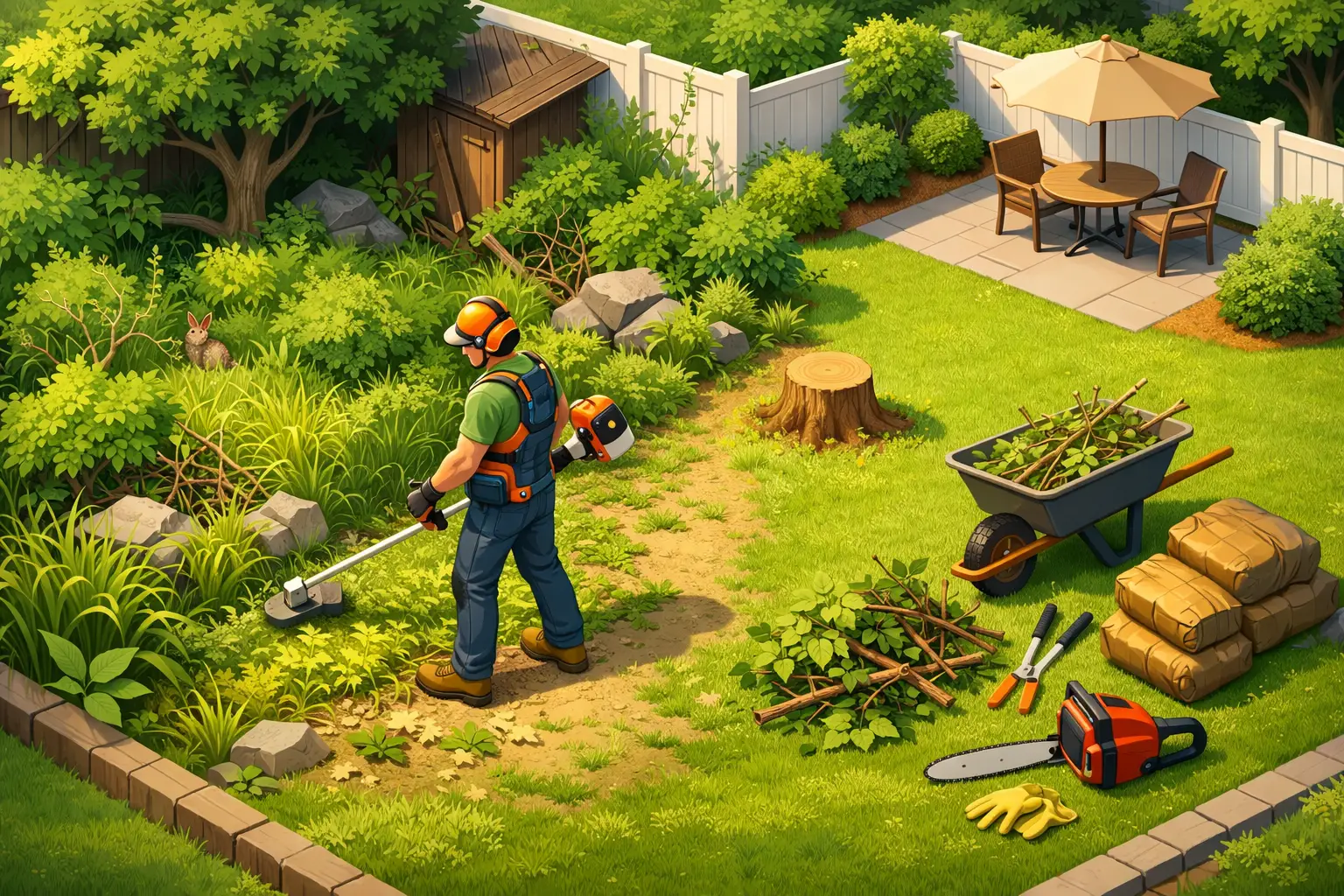
That backyard did not get out of hand overnight. It usually starts with a few missed weekends, a broken fence line, fast spring growth, or a storm that drops limbs and turns a manageable space into a job nobody wants to touch. If you are wondering how to clear overgrown backyard areas without creating a bigger mess, the first step is knowing what you are really dealing with.
An overgrown yard is rarely just tall grass. It can mean brush tangled around fence posts, low tree limbs over a play area, hidden stumps, vines pulling at structures, and debris that makes basic cleanup slower and less safe. For many homeowners in the Oklahoma City area, the goal is not a DIY project. It is getting the yard safe, usable, and cleaned up the right way the first time.
What makes an overgrown backyard hard to clear
The biggest issue is usually access. When brush, saplings, weeds, and fallen limbs pile up together, you cannot always see the ground. That means there may be holes, loose wire, old fencing, sprinkler parts, rocks, and stump roots hidden underneath. A job that looks simple from the patio can quickly turn into a safety problem once cutting starts.
Tree growth also changes the scope. If larger limbs are hanging low or dead branches are mixed into the overgrowth, clearing the ground first may not be enough. In some yards, the safe order is the opposite – remove overhead hazards, then clear the brush below. That is especially true when kids, pets, sheds, fences, or neighboring properties are nearby.
There is also the cleanup itself. Cutting vegetation is only half the job. Hauling it out, chipping or loading debris, and leaving the site clean often takes as much time as the clearing work. Homeowners usually feel the difference here. A yard can be cut back in a day and still look unfinished if the debris is left in piles.
How to clear overgrown backyard spaces the right way
A professional crew starts with an on-site look at the property, not a guess from the street. That matters because two overgrown backyards can look similar while needing very different equipment and labor. One may need brush clearing and haul-off. Another may need tree trimming, stump grinding, fence access work, and storm debris removal before the space is truly usable again.
The first priority is identifying hazards. Dead limbs, leaning trees, unstable brush piles, and hidden obstacles should be dealt with before heavy clearing begins. Safety drives the sequence. If a tree is compromised or a large limb is hanging over the work zone, that gets addressed first.
After that, the yard is usually cleared in sections. This keeps the work controlled and prevents one large pileup of debris from slowing down the whole job. Thick brush and vines come out first, then smaller volunteer trees and saplings, then ground-level overgrowth. If the property has a fence line buried in vegetation, that area often needs a more careful approach so the fence is not damaged during removal.
Once the growth is cut back, the real condition of the yard becomes visible. That is when crews can spot whether additional work is needed, such as stump grinding, low limb pruning, or fence repair. This is one reason professional clearing tends to save time. It solves the whole problem in the correct order instead of only improving the appearance for a week or two.
When clearing overgrowth becomes a tree and fence job
Backyard overgrowth often affects more than the lawn. Thick vegetation around fences holds moisture, adds weight, and hides damage. Posts can loosen, pickets can rot, and sections can lean without being noticed until the brush is gone. If the goal is to reclaim the yard, it makes sense to look at the structures inside it too.
The same goes for trees. Low limbs can block mowing, scrape roofs, or hang over gathering areas. Larger branches may be healthy and only need trimming. Others may be cracked, storm-damaged, or positioned in a way that creates ongoing risk. A crew that understands both tree work and backyard improvement can spot what should be pruned, what should be removed, and what can stay.
This is where homeowners often save themselves a second appointment. If overgrowth clearing uncovers a damaged fence line or a tree issue, handling it with one contractor is usually faster and cleaner than patching the job together across multiple companies.
Signs it is time to call a professional crew
If the overgrowth includes woody brush, saplings, thorny vines, heavy debris, or anything above basic mowing height, the job is already moving beyond routine yard work. The same is true if you cannot see the ground clearly, if branches are hanging overhead, or if part of the backyard backs up to a neighbor, alley, or utility area.
Another clear sign is time. Many homeowners start clearing with good intentions and realize quickly that weekends disappear fast when every step involves cutting, dragging, stacking, and hauling. What seems like a one-day cleanup can turn into a month of partial progress, especially in Oklahoma heat.
Professional help is also the better call when clean results matter. If you want the yard usable again, not just knocked down, the work needs to end with removal, cleanup, and a clear plan for what stays and what goes.
What to expect during overgrown backyard clearing
Most homeowners want to know two things: how long it will take and how disruptive it will be. The honest answer is that it depends on density, access, debris volume, and whether tree or fence issues are involved. A smaller backyard with moderate overgrowth may move quickly. A yard with storm damage, hidden fence lines, and thick volunteer growth will take more planning.
What should not vary is the process. Good crews show up with the right equipment, work safely, protect the property, and clean as they go. That last part matters. Backyard clearing is not finished when the brush is cut down. It is finished when the debris is removed, the work area is left orderly, and the property owner can actually use the space again.
For homeowners, that means fewer surprises. A reliable contractor should be clear about scope, straightforward about what is hidden until the growth is removed, and realistic about whether the job is strictly clearing or part of a bigger outdoor improvement project.
Why quick fixes usually do not last
A lot of overgrown yards have already had a quick fix at some point. The grass gets cut. The visible brush gets knocked back. A few piles get moved to the corner. For a short time, it looks better. Then the same issues return because the root causes were never addressed.
If saplings are left in place, they come back stronger. If low tree limbs still shade the yard heavily, ground growth stays hard to manage. If a damaged fence continues trapping vegetation, the same section becomes overgrown again. Good clearing work should improve maintenance going forward, not just reset the problem for one season.
That may mean pairing clearing with pruning, tree removal, stump work, or fence replacement where needed. Not every yard needs all of that, but many need more than simple cutting.
Choosing the right help for the job
When hiring for overgrowth clearing, experience matters, but so does jobsite discipline. Homeowners should expect a company that works safely, carries proper coverage, communicates clearly, and leaves the property clean. That is especially important when tree limbs, structures, and tight backyard access are part of the equation.
Local knowledge helps too. In the Oklahoma City area, fast growth, storm debris, clay-heavy ground, and hot-weather timing all affect how backyard clearing should be handled. A crew that understands these conditions is more likely to move efficiently and avoid preventable setbacks.
Fowler’s Tree & Fence handles these kinds of backyard problems with the same standard we bring to every job – safe, clean, and done right the first time. Whether the yard needs heavy brush clearing, tree work, fence-related cleanup, or a combination of services, the goal is simple: make the space usable again without leaving behind a bigger headache.
If your backyard has reached the point where you avoid it, that is usually the sign to stop waiting. The sooner overgrowth is cleared correctly, the easier it is to protect the property, restore the space, and get back to using your yard the way you planned to.


0 Comments