
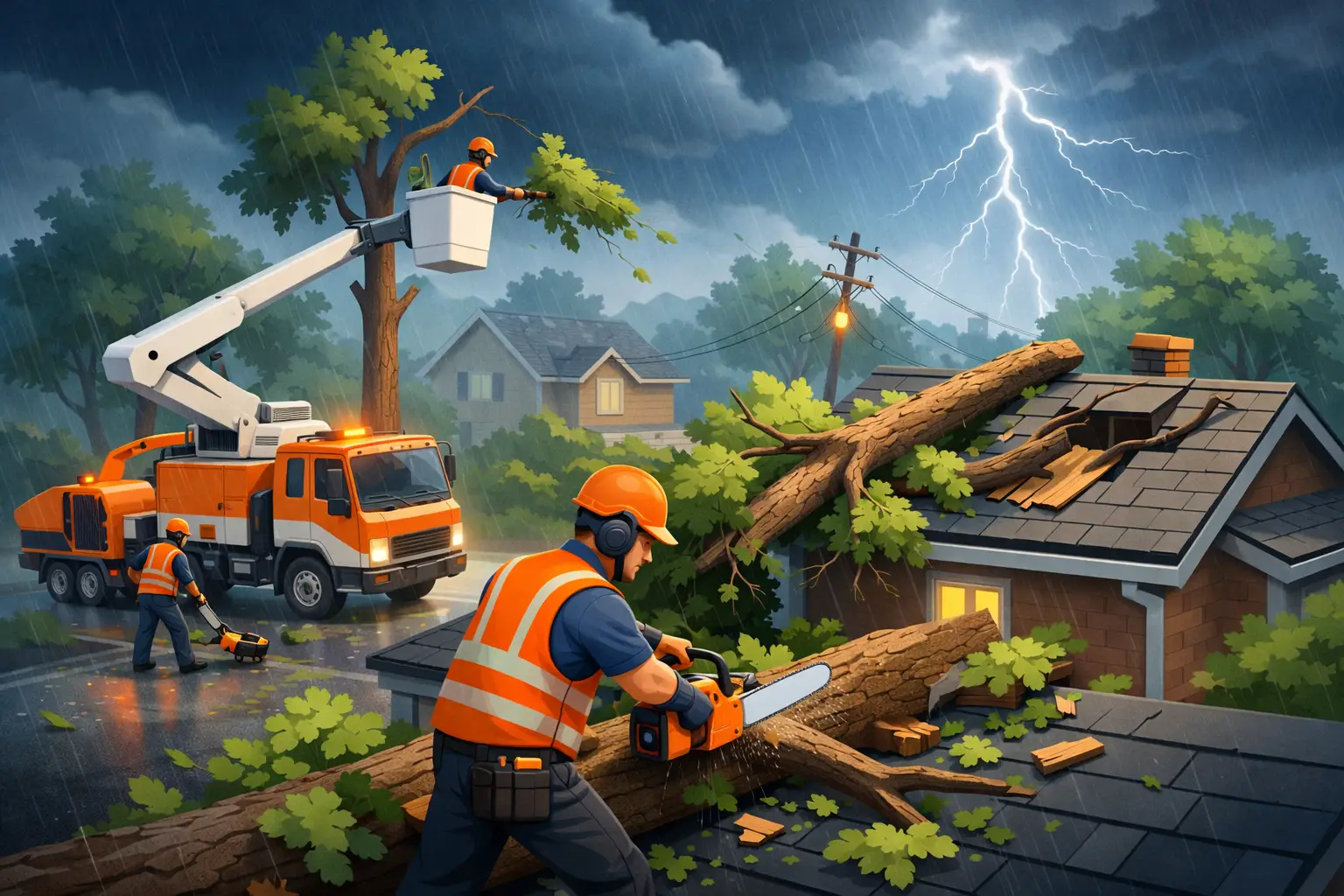
A cracked limb hanging over the driveway is not something most homeowners want to think about at 9 p.m. after a storm. But in Oklahoma, weather can turn a healthy-looking tree into a real hazard in a matter of minutes. When that happens, emergency tree service is not about appearance – it is about protecting your home, your family, your vehicles, and anyone walking near the property.
Storm damage is the obvious reason people call for help, but it is not the only one. Trees can fail after high winds, saturated soil, lightning strikes, decay, or old storm damage that finally gives way. A tree leaning toward the house, a split trunk, or a large limb resting on a roof all call for quick professional attention. These are not jobs to watch for a few days and hope they improve. They usually get worse, not better.
What counts as emergency tree service?
Not every tree problem is an emergency, and that matters because the response should match the risk. Emergency tree service is typically needed when a tree or large limb creates an immediate safety issue or threatens to cause more damage if left alone.
That includes trees or limbs on a house, garage, fence, vehicle, or power line. It also includes trees blocking a driveway or street, split trunks that look close to failing, and branches hanging loose after wind or ice. In some cases, the tree is still standing but the root plate has started lifting from the ground. That is a major warning sign, especially after heavy rain and wind.
On the other hand, a tree with dead branches, overgrowth, or light storm debris may still need attention, just not an emergency response. It depends on how close the damage is to people, structures, and access areas. A good contractor will tell you the difference instead of treating every service call like a crisis.
Why fast response matters in emergency tree service
The first problem is the visible one – a limb on the roof or a tree across the yard. The second problem is what can happen if that damage sits. Roof openings let in water. Split trunks can fall the rest of the way. Trees caught in fences can pull sections down with them. Limbs tangled above driveways, patios, and walkways can shift without warning.
Fast response helps limit the damage, but speed alone is not enough. The work has to be done safely and cleanly. Rushed tree work without the right equipment can create more property damage or put workers and homeowners in danger. That is why emergency jobs call for an experienced crew, proper insurance, and a plan for securing the area before cutting begins.
This is also where local knowledge matters. Oklahoma weather is not gentle on trees. High winds, sudden thunderstorms, wet spring soil, and summer stress all affect how a damaged tree behaves. A crew that regularly handles storm cleanup in this area will usually spot hazards that are easy to miss from the ground.
What to do before the crew arrives
If a tree has fallen or looks unstable, the safest move is usually the simplest one – stay clear. Keep children and pets away from the area. Do not walk under hanging limbs or try to move large branches yourself. Even pieces that look settled can shift when weight changes.
If a tree is touching power lines, treat it as a utility emergency first. Stay back and contact the power company. Tree crews can work around many difficult situations, but electrical hazards require the right sequence and clear coordination.
If it is safe to do so, take a few photos for documentation. That can help with insurance, especially if the tree damaged a roof, fence, or other structure. After that, the best thing most homeowners can do is wait for a qualified crew rather than trying a temporary fix with a ladder, chainsaw, or rope.
What a professional emergency tree service visit should look like
A reliable response starts with assessment, not random cutting. The crew should identify what is under tension, what is supporting weight, what could shift next, and how to remove the damaged sections without making the situation worse.
Sometimes the goal is full removal that same day. Other times the first priority is making the property safe, such as taking pressure off a roof, clearing access, or removing suspended limbs. If the ground is too soft for certain equipment or if the tree is entangled with another structure, the job may happen in phases. That is normal. Safe work is not always one quick cut and done.
You should also expect cleanup to be part of the service, not an afterthought. In an emergency, homeowners are already dealing with enough stress. A professional crew should remove debris, leave the site orderly, and clearly explain what was completed and what may still need follow-up.
That follow-up can matter more than people expect. Once a fallen tree is removed, the next issue may be stump grinding, fence repair, or trimming nearby trees that were weakened in the same storm. This is one reason many homeowners prefer working with one dependable company that can handle more than a single piece of the problem.
Emergency tree service and insurance questions
A lot of homeowners ask the same thing first – is this covered? The honest answer is that it depends on the cause of the damage, what the tree hit, and the details of the policy. If a tree falls on a covered structure, insurance may help with removal and repairs. If a tree falls in the yard and does not damage anything, coverage may be different.
That is one more reason to call quickly and document the damage. Photos, basic notes, and a clear description of what happened can make the claim process smoother. A professional tree company cannot decide your coverage, but it can often provide the job details you need for your records.
Choosing the right emergency tree service company
In an urgent situation, homeowners do not need a sales pitch. They need a crew that answers the phone, shows up, works safely, and leaves the property in good shape. That starts with basics that should never be skipped – insured and bonded status, experience with storm-damaged trees, and equipment suited for difficult removals.
It also helps to ask how the company handles cleanup, whether they provide on-site estimates, and what the expected timeline looks like. Emergency work is not always predictable, especially after a major storm when multiple neighborhoods are affected. A trustworthy contractor will be direct about availability instead of overpromising.
Local reputation matters here too. Homeowners in the Oklahoma City area are not just hiring for one day. They are often choosing who they will call the next time a tree leans over the fence line, a stump needs grinding, or storm cleanup leads to other outdoor repairs. Fowler’s Tree & Fence has built trust by staying focused on what homeowners actually need – safe work, clean jobsites, responsive scheduling, and work done right the first time.
The best emergency tree service call is the one you avoid
Not every emergency can be prevented. Strong storms will always test trees, even well-maintained ones. But many urgent calls start with issues that were visible months earlier – dead limbs, poor structure, decay, overgrown canopies, or trees crowding roofs and fence lines.
Routine trimming and pruning help reduce that risk. Removing weak limbs, correcting heavy overgrowth, and catching signs of decline early can make a big difference before the next storm rolls through. That does not mean every tree near a house is dangerous. It means regular inspection and maintenance give homeowners better odds.
The goal is simple. When weather hits hard, you want your property in the best condition possible and a trusted crew in mind if something goes wrong. Emergency tree service is about quick action, but it is also about confidence – knowing the job will be handled safely, cleanly, and with real care for your home. If a tree on your property becomes a hazard, the right next step is not guessing. It is getting experienced help on site and getting the problem under control.


0 Comments