
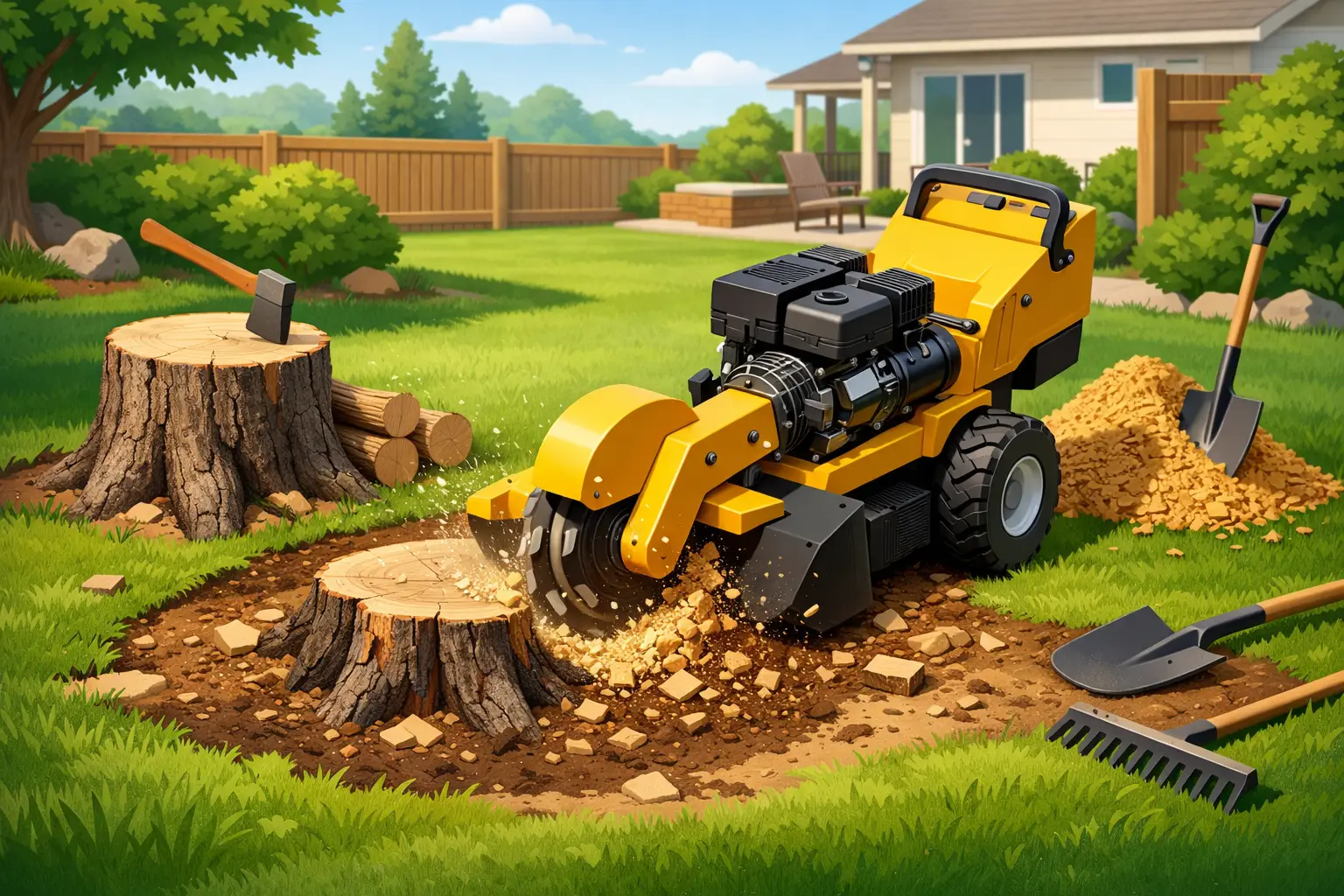
That old stump usually starts as a minor annoyance. Then you mow around it for the fifth time, someone nearly trips over it, and you realize it is taking up more space in your yard and your attention than it should. If you are asking is stump grinding worth it, the honest answer is yes in many cases – especially when safety, curb appeal, and long-term cleanup matter.
For most homeowners, the real question is not whether a stump looks bad. It is whether leaving it in place will keep costing you time, money, and usable yard space. In a lot of Oklahoma City properties, the answer is yes.
Is stump grinding worth it in most cases?
In practical terms, stump grinding is usually worth it when the stump is in a visible area, near foot traffic, close to a fence line, or sitting where you want healthy grass or a future project. Grinding removes the main above-ground problem without the disruption of full root excavation. That makes it a smart middle ground for homeowners who want the yard cleaned up properly without turning the entire area into a major construction zone.
It also solves a problem that tends to get worse with time. A stump does not stay neutral forever. It can attract insects, create mowing headaches, send up shoots, and slowly become more of an eyesore as the surrounding yard improves while that one leftover piece never does.
That said, not every stump needs immediate attention. If it is far from the house, well outside regular activity areas, and not affecting landscaping or future work, some homeowners choose to leave it for a while. Whether that makes sense depends on the size, species, location, and condition of the stump.
What you actually get when a stump is ground
A lot of people hear stump grinding and picture the entire root system disappearing. That is not usually how it works. Grinding removes the visible stump and cuts it down below grade so the area can be leveled, cleaned up, and returned to useful space.
This matters because most homeowners are not looking for a science lesson on root biology. They want the trip hazard gone, the yard to look finished, and the area to be easier to maintain. Stump grinding delivers that in a way that is faster and less invasive than digging everything out.
For a residential yard, that often means less disturbance to surrounding grass, nearby trees, irrigation, sidewalks, and fencing. If the stump sits close to an existing structure or landscape feature, grinding is often the cleaner solution.
The biggest reasons homeowners say yes
The first reason is safety. Stumps create easy trip hazards, especially for kids, guests, and anyone moving through the yard after dark. Even a low stump can be a problem if grass grows around it and partially hides the edge.
The second is maintenance. Mowing around a stump gets old fast. Weed trimming around it adds extra work and can leave the area looking rough no matter how much effort you put in. Once the stump is gone, routine yard care becomes simpler and cleaner.
The third is appearance. A cut-down tree without stump removal often makes the job feel unfinished. If you have invested in tree removal, fence work, landscaping, or general property upkeep, an old stump can pull down the whole look of the yard.
The fourth is pest control. Decaying wood can attract termites, ants, beetles, and other insects. Not every stump becomes a pest problem, but it can become one, especially as it starts to break down. If the stump is near the house, deck, shed, or fence, many homeowners would rather remove the risk than wait to see what happens.
When stump grinding may not feel worth it
There are situations where homeowners pause, and that is fair. If the stump is tucked into a back corner, not visible, and not interfering with anything, it may not feel urgent. Budget can also be part of the equation, especially if multiple trees came down at once and you are deciding what to handle now versus later.
There are also cases where a homeowner plans to fully rework the area soon. If excavation, grading, retaining wall work, or major landscape changes are already scheduled, it may make sense to coordinate stump handling with that larger project.
Still, delaying is different from avoiding. A stump left in place often becomes a problem later, usually at the least convenient time – when someone wants to install a fence, pour a patio extension, regrade a section of yard, or sell the home and clean up the exterior.
Cost versus value
The reason many people ask is stump grinding worth it comes down to cost. That is understandable. Homeowners want to know if they are paying for something truly necessary or just cosmetic.
The value is usually a mix of practical and visual benefits. You are paying to remove an obstacle, improve safety, reduce future yard frustration, and make the space usable again. In many cases, that is money well spent because the alternative is continuing to work around a problem that never gets better on its own.
The size of the stump, the type of tree, access to the area, and how many stumps need to be removed all affect pricing. So does location. A large stump in a tight backyard near fencing or utilities is a different job than a small stump in an open front yard.
That is why the right way to judge value is not just by the invoice. It is by what the stump is costing you if it stays. Extra yard work, safety concerns, pest risk, lost use of the space, and an unfinished look all have real value even if they do not show up as a monthly bill.
Oklahoma conditions can make the decision easier
In Oklahoma, storms, wind damage, and fast seasonal growth can turn tree work into an urgent need. Once a damaged or unwanted tree has been removed, leaving the stump behind often feels like half the job.
Our local soil conditions and weather swings also matter. A neglected stump can sit in the middle of a yard through wet periods, dry periods, weed growth, and changing ground levels. Over time, that can make maintenance harder and cleanup messier, not easier.
For homeowners planning new sod, a fence replacement, brush clearing, or general backyard improvement, stump grinding is often one of those steps that clears the way for everything else. It is much easier to improve a yard when old obstacles are gone first.
Why professional grinding usually makes more sense than waiting
Stump grinding is one of those jobs that sounds smaller than it is. The equipment is specialized, the work area needs to be handled carefully, and there is a real difference between knocking a stump down and doing the job cleanly.
A professional crew is not just there to grind wood. They are there to protect the surrounding property, work safely around utilities and structures, and leave the area in a condition that is ready for the next step. That matters when the stump is close to a fence line, a driveway, landscaping, or the home itself.
For homeowners who want dependable results, clean work, and a straightforward estimate, that experience makes a difference. Fowler’s Tree & Fence sees this often – customers call after living with a stump for months or years, and once it is gone, the yard immediately feels safer, cleaner, and easier to manage.
So, is stump grinding worth it for your property?
If the stump is creating a hazard, hurting the look of the yard, getting in the way of mowing, attracting insects, or blocking a future project, yes, it is usually worth it. It is one of those services that removes a lingering problem and makes the rest of the property easier to care for.
If the stump is isolated and truly not affecting anything, you may be able to wait. But most homeowners who leave a stump in place do not end up liking it more over time. They usually end up wishing they had taken care of it sooner.
A yard should work for your family, not force you to work around old problems. When a stump is taking up space, creating risk, or making the property feel unfinished, grinding it out is often the clean, practical fix that helps everything else fall into place.


0 Comments