
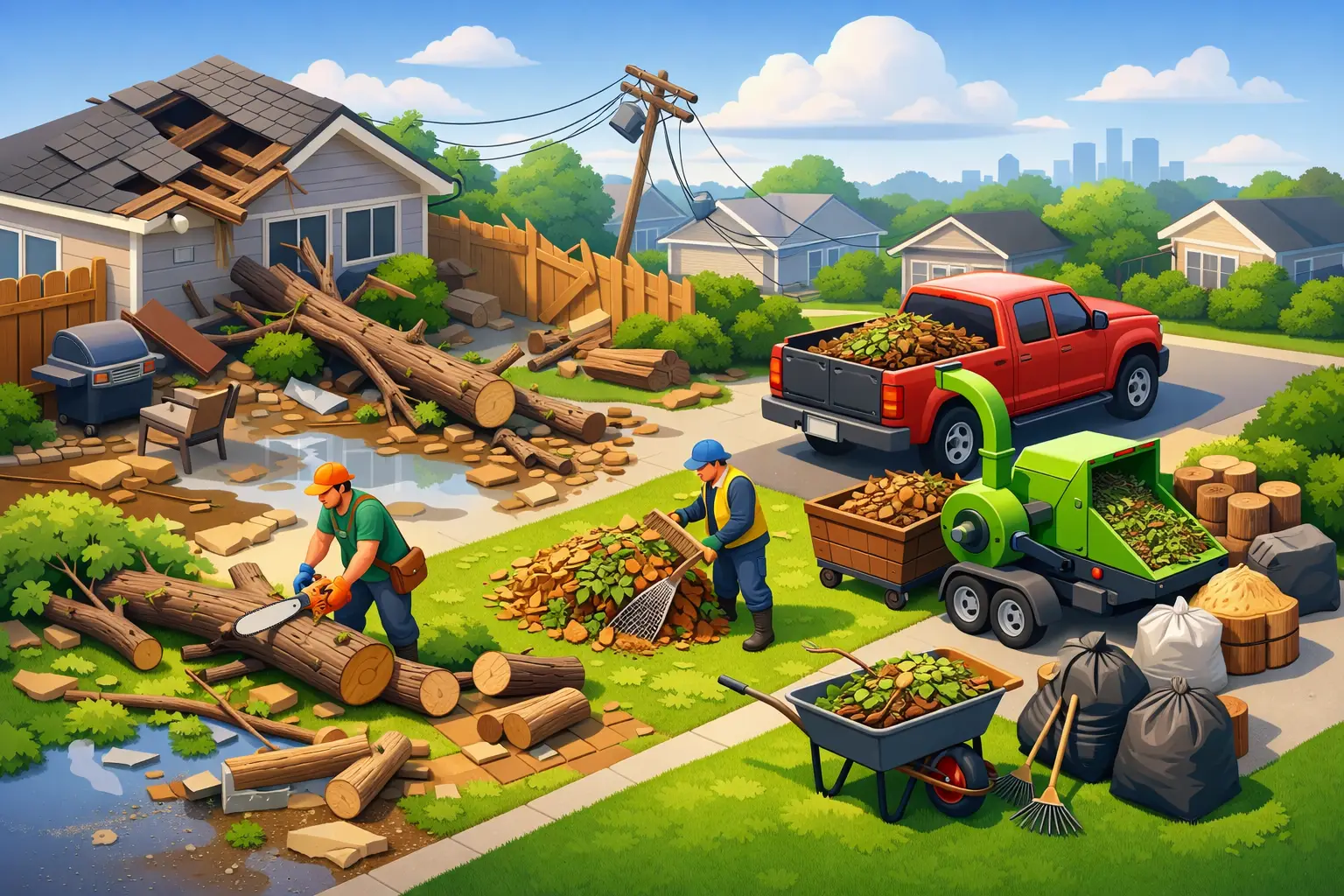
The morning after a strong Oklahoma storm, the damage usually looks worse in daylight. Limbs are scattered across the lawn, fencing may be leaning or broken, and what looked like a manageable mess from the window can turn out to be a real safety issue once you step outside. When you need yard cleanup after storm damage, the first priority is not appearance. It is making the property safe, preventing further damage, and getting the cleanup handled the right way.
Storm cleanup is one of those jobs that can seem straightforward until you are standing next to a split tree, a downed fence section, and a yard full of debris. In Oklahoma City, high winds, heavy rain, ice, and sudden weather shifts can create a combination of hazards that require more than basic yard work. A proper cleanup protects your home, your family, and the long-term condition of your property.
What yard cleanup after storm damage really includes
A storm-damaged yard is rarely just a debris problem. Fallen limbs may be putting stress on a tree that is still standing. Saturated ground can weaken root systems. Broken fencing can leave pets and children exposed to unsafe areas. Even smaller debris can hide sharp branches, unstable stumps, or damaged irrigation and landscape features.
That is why yard cleanup after storm damage often involves more than hauling away brush. It may include removing hanging or cracked limbs, clearing overgrowth that was brought down by wind, cutting and hauling fallen trees, grinding stumps if needed, and addressing damaged fence lines or retaining areas that were affected by runoff. The goal is not just to make the yard look clean again. The goal is to leave it safe, usable, and easier to restore.
In some cases, cleanup can be completed in one visit. In others, it makes sense to handle the urgent hazards first and come back for repairs or deeper restoration once the site is stabilized. That depends on the severity of the storm, the size of the damage, and whether trees or structures were compromised.
Safety comes before speed
Homeowners naturally want to get their yard back in shape fast. That makes sense, especially when debris is blocking driveways, patios, or access to the home. But speed should never come at the cost of safety.
Storm-damaged trees are unpredictable. A limb can look grounded and still be under tension. A partially uprooted tree can shift during cleanup. Fence posts may have been loosened below the surface even if the panel is still standing. Wet ground adds another layer of risk because equipment traction changes and root systems are less stable.
This is where professional cleanup matters. A trained crew knows how to assess what is safe to move, what needs to be cut in sequence, and what should not be touched until the area is secured. That judgment is what separates a true cleanup service from simple debris pickup.
For homeowners, the safest move is usually to stay clear of damaged trees, avoid climbing or cutting, and keep children and pets away from affected areas until the site has been inspected.
The most common problems after Oklahoma storms
In the Oklahoma City area, storm damage tends to hit outdoor spaces in a few consistent ways. Large limbs break over yards and roofs. Entire sections of fencing are pushed over by wind or hit by falling branches. Brush and smaller debris get driven into corners, flower beds, and along fence lines. Heavy rain can also expose drainage issues that were already forming before the storm.
That last point matters. Storms often reveal existing weaknesses. A tree with poor structure may fail where it has been stressed for years. A fence may lean after a storm, but the real issue may have been weakened posts or shifting soil. Cleanup is the right time to look beyond the immediate mess and address the problem that made the damage worse.
That does not mean every yard needs major repairs after every storm. Sometimes the damage is limited to scattered limbs and surface debris. But when larger trees, fence systems, or erosion-prone areas are involved, cleanup and repair often go hand in hand.
What to expect from a professional yard cleanup after storm damage
A reliable storm cleanup service should start with a clear assessment of the site. That means identifying immediate hazards, checking the condition of damaged trees, and evaluating whether fencing, brush, or landscape structures are affecting safe access.
From there, the work should follow a logical order. Hazard removal comes first. Debris hauling and site clearing come next. Then, if needed, repair recommendations can be made for trees, fencing, or other outdoor features that were damaged.
Cleanliness matters too. A good crew does not just cut and leave. They remove debris, clear the work area, and leave the property in a condition that feels usable again. For many homeowners, that is a big part of the relief. After a storm, you want the job finished, not half-finished with brush piles still sitting in the yard.
It also helps to work with a company that can handle more than one type of exterior damage. If a storm brought down limbs onto a fence line, for example, it saves time and frustration to deal with one crew that understands both tree and fence work. That kind of coordination can make cleanup faster and reduce the chances of something being missed.
Why partial cleanup is sometimes the wrong move
One of the more common problems after a storm is trying to solve only the visible part of the damage. A homeowner may have the obvious debris removed, but leave a split limb overhead, a damaged trunk, or a weakened fence section for later. The trouble is that later can turn into the next storm.
Partial cleanup can make sense if you are staging a larger repair, but only if the remaining issues are stable and clearly identified. If they are not, the property may still be unsafe even though it looks better from the street.
This is especially true with trees. A tree that lost major limbs may survive with proper pruning and care, or it may need removal if the structure is compromised. The right answer depends on the species, the extent of the break, the proximity to the home, and the condition of the root system. It is not always obvious from the ground.
Fence damage works the same way. Replacing a few pickets might be enough in one yard. In another, the impact may have pulled posts loose or twisted the frame so badly that spot repairs will not hold. It depends on how the fence was built, how old it is, and what force it took during the storm.
Choosing the right crew for storm cleanup
When the yard is a mess and the weather has everyone calling at once, it is tempting to hire the first company that answers the phone. But storm work is not the place to cut corners.
Look for a company that is insured, responsive, and experienced with hazardous outdoor cleanup. Ask whether they handle both removal and cleanup, not just cutting. Ask how quickly they can schedule. Ask what the jobsite will look like when they are done.
Clear communication matters as much as equipment. Homeowners need to know what is being removed, what can be saved, and whether any follow-up repairs are recommended. A dependable company should be able to explain that plainly without making the process feel complicated.
For local homeowners, working with a company that knows Oklahoma weather patterns and property conditions is a real advantage. The challenges here are specific. Wind exposure, clay-heavy soils, mature trees, and fence wear all affect how storm damage shows up and how it should be handled.
A clean yard is only part of the job
The visible cleanup is what most people focus on first, and understandably so. But the real value of professional storm cleanup is peace of mind. You want to know the fallen limbs are gone, the damaged tree has been properly assessed, the fence line is secure, and the yard is not hiding another problem waiting to surface.
That is the standard homeowners should expect. Safe work. Clean results. No guesswork about whether the job was really finished.
At Fowler’s Tree & Fence, that is how storm cleanup should be handled – with urgency, care, and respect for the property. Because after a storm, homeowners do not need more uncertainty. They need a crew that shows up, does the work safely, and leaves the yard clean enough to feel like home again.
If your property took a hit in the last storm, do not wait for the next one to show you what was missed.


0 Comments