
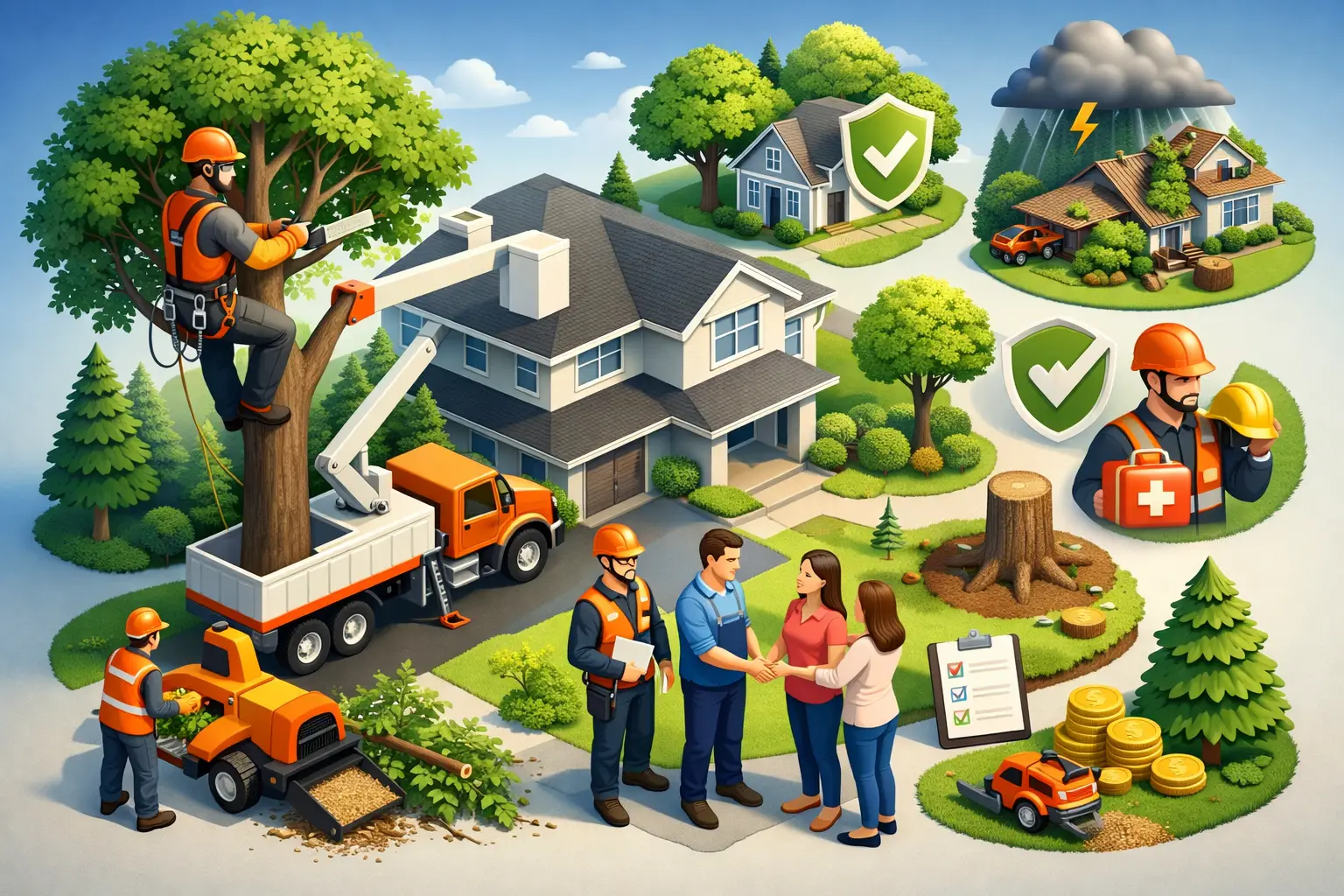
A heavy limb hanging over a roof after an Oklahoma storm is not a job to hand to the first crew with a chainsaw. The insured tree service benefits homeowners care about most are practical: protection when work is high-risk, a crew that takes safety seriously, and fewer expensive surprises if something goes wrong.
Tree work can look simple from the ground. Once a crew is working near power lines, fences, vehicles, roofs, sheds, and neighboring property, the stakes change quickly. Hiring an insured professional is one of the clearest ways to protect your home while getting the job handled properly.
Why insurance matters for tree work
Tree trimming and removal involve elevated work, heavy equipment, falling wood, and conditions that can shift without warning. A dead limb may break differently than expected. A tree can carry hidden decay. Wet ground can affect how equipment moves through a yard. Even a careful plan has to account for real jobsite risks.
An uninsured contractor may offer a lower price, but that price can leave a homeowner exposed. If a worker is hurt or property is damaged, questions about responsibility can become stressful and costly. Insurance does not mean accidents are expected. It means the company has taken responsibility for preparing for the possibility.
For homeowners, that is a meaningful difference between hiring help and hiring a professional service.
7 insured tree service benefits that protect your property
1. Better protection if property is damaged
A qualified tree crew plans each cut around the drop zone and surrounding structures. Still, tree work is not risk-free. General liability coverage is designed to address accidental property damage connected to the work, subject to the policy terms and coverage limits.
That matters when a tree stands close to a fence, garage, driveway, outdoor unit, or neighbor’s yard. Before work begins, ask the company whether it carries general liability insurance and request current proof of coverage. A reputable contractor should be prepared to answer clearly.
2. Reduced exposure when workers are on your property
Tree removal is physically demanding work. Climbers, ground crews, chainsaws, chippers, loaders, and ropes all require trained coordination. If a worker is injured while doing a job at your home, workers’ compensation coverage can be an important safeguard.
Coverage requirements and arrangements can vary, so it is reasonable to ask how the company covers its employees and subcontractors. Do not assume that a contractor’s general liability policy covers worker injuries. These are different risks, and a direct conversation before scheduling is worth having.
3. A stronger sign of professional accountability
Insurance alone does not prove that every company delivers excellent work. It is not a substitute for experience, careful estimates, proper equipment, or good communication. But maintaining insurance is a real sign that a business takes its responsibilities seriously.
Professional crews invest in more than a truck and a saw. They plan the work, maintain equipment, train their people, and carry the business protections needed for higher-risk jobs. That investment often shows up in the way they inspect a tree, protect the work area, and clean up before leaving.
4. Safer planning around homes, fences, and utilities
The best tree work happens before the first cut. An insured, experienced crew should look at lean, decay, branch weight, access points, nearby structures, utility lines, traffic, and the condition of the ground. From there, the team can determine whether climbing, rigging, a bucket truck, or sectional removal is the safer approach.
This is especially important in established Oklahoma City neighborhoods, where mature trees often grow close to homes and property lines. A crew may need to lower branches in controlled sections instead of dropping them freely. That can take more time, but it is often the right call for protecting the property below.
5. More confidence after storm damage
Storm cleanup creates urgency, but it should not erase good judgment. Wind-damaged trees can be under tension, tangled in other branches, or resting against a roof or fence in unstable ways. A limb that looks secure can shift as soon as weight is removed.
An insured tree service is better positioned to approach emergency work with a safety plan rather than a rushed guess. The crew can assess what is immediately hazardous, establish a safe work area, and remove damaged material in an order that reduces risk. If power lines are involved, homeowners should keep clear and contact the utility provider as needed before anyone begins work near the lines.
6. Clearer expectations before the job starts
Trustworthy contractors do not use insurance as a vague sales phrase. They pair it with a clear estimate and a straightforward scope of work. Homeowners should know whether the job includes trimming, full removal, hauling, stump grinding, brush clearing, or cleanup of debris.
Ask what access the crew will need and whether gates, fences, landscaping, or irrigation heads need special protection. If the tree is near a shared boundary, communicate with neighbors early. A clear plan reduces misunderstandings and helps the crew arrive ready to work efficiently.
At Fowler’s Tree & Fence, the goal is simple: safe, clean, and done right the first time. That means treating the estimate, the work area, and the final cleanup as part of the same job, not separate concerns.
7. Greater peace of mind for the long term
The biggest benefit is often the one homeowners feel after the truck leaves. You know the hazardous limb was addressed by a crew equipped for the job, debris was removed, and the company had coverage in place while working on your property.
That peace of mind matters whether the project is a single overgrown branch or a large removal. It also matters when tree work is part of a larger yard improvement project. Removing a problem tree, clearing brush, grinding a stump, and preparing for a new fence or retaining wall can all affect how your outdoor space functions for years.
What to ask before hiring a tree service
A quick conversation can tell you a lot about a contractor. Ask whether the company is insured, what types of coverage it carries, and whether it can provide proof. Ask who will perform the work, whether subcontractors will be involved, and how the crew plans to protect nearby structures.
You should also ask how cleanup is handled. A low quote may not include hauling logs, removing brush, raking smaller debris, or grinding the stump. There is nothing wrong with choosing a more limited service if that fits your budget, as long as the scope is clear before work begins.
Price matters, but it should be weighed against the difficulty of the job. A small tree in an open yard may be straightforward. A decaying tree over a roof, fence, or tight side yard requires more planning, labor, and control. The cheapest estimate is not always the lowest-cost decision once risk, cleanup, and potential damage are considered.
Insurance and bonding are not the same thing
Homeowners often hear that a company is “insured and bonded” and assume the terms mean the same thing. They do not. Insurance generally addresses covered losses, such as certain accidents or damage. A bond is a separate financial guarantee related to specific obligations or agreements.
Both can be positive signs, but neither should end the conversation. Verify current coverage, read the estimate, and choose a company that explains the work in plain language. A contractor who welcomes those questions is more likely to communicate well throughout the project.
When a tree becomes a risk to your home, your fence, or the people using your yard, waiting can make the job harder. Choose a local crew that can assess the situation honestly, show up prepared, and leave your property safer and cleaner than they found it.


0 Comments