
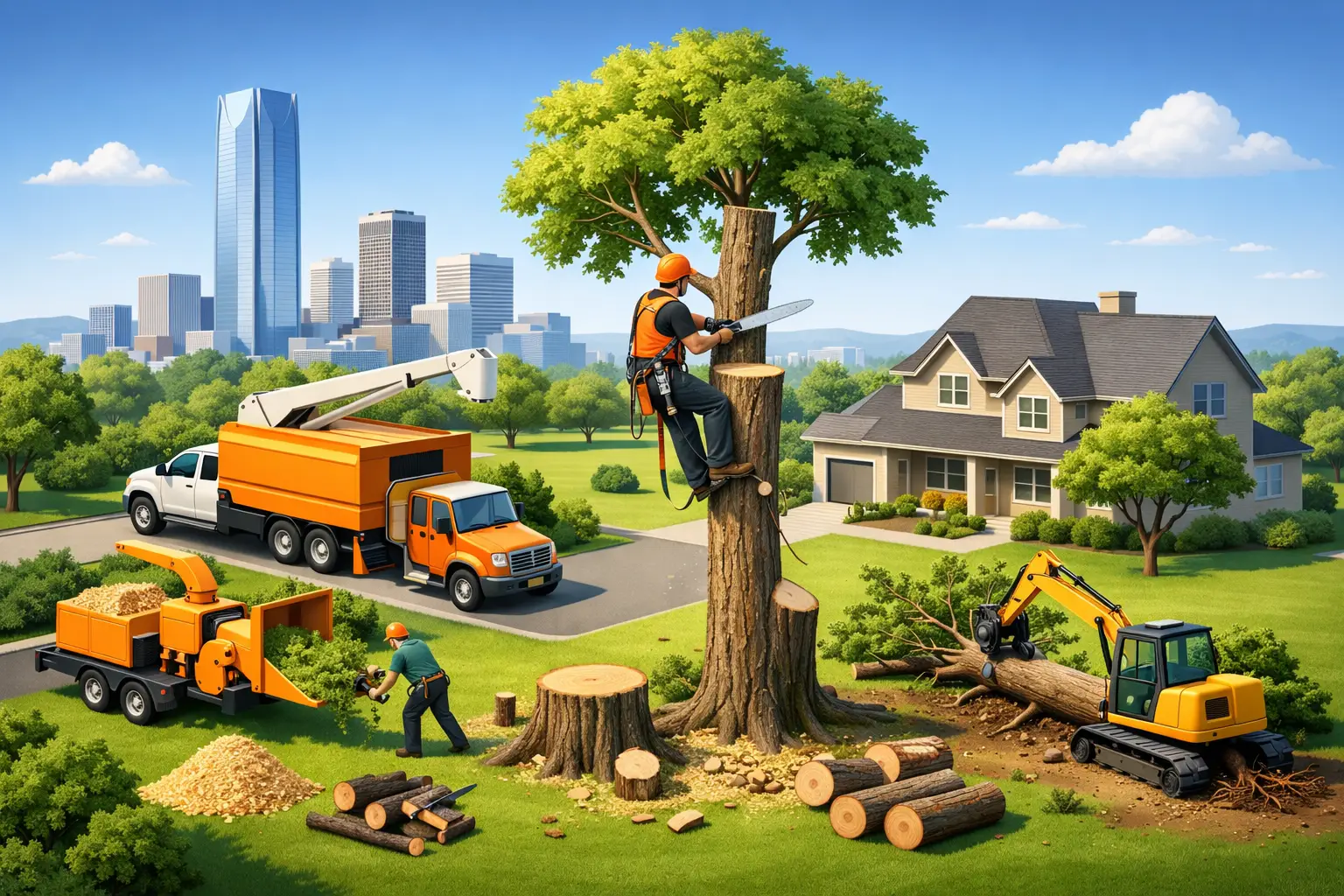
When a tree starts leaning over the roof, drops heavy limbs after a storm, or dies out in the middle of the yard, price becomes an urgent question. This tree removal cost guide is built for Oklahoma City homeowners who want a clear picture of what drives the estimate, what can raise the price, and what a fair, professional job should include.
Tree removal is not priced like mowing a lawn or hauling off a couch. Every job is tied to risk, equipment, access, and cleanup. Two trees that look similar from the street can cost very different amounts to remove once a crew sees the trunk condition, branch spread, power line proximity, and whether the tree can be dropped in one piece or has to be dismantled section by section.
What actually affects tree removal cost
The biggest factor is usually tree size, but size alone never tells the whole story. A small tree in an open front yard is typically straightforward. A medium or large tree hanging over a house, fence, driveway, or neighboring property requires more planning, more labor, and often more specialized equipment.
Height matters because taller trees take longer to remove safely. Diameter matters because heavier wood is harder to cut, rig, lower, and haul away. Canopy spread matters because wide limbs over structures create more risk and usually force a crew to take the tree apart carefully instead of felling it in one direction.
Condition matters too. A dead tree can be more dangerous than a healthy one because the wood may be brittle or rotten. That changes how the crew climbs it, whether they can rig from certain limbs, and how much time they need to keep the work controlled. Storm-damaged trees are another category where pricing can shift fast. A partially split trunk or a tree under tension after high winds is not just cleanup. It is hazard work.
Tree removal cost guide by common pricing factors
If you are comparing estimates, it helps to know what contractors are usually pricing around.
Tree size and weight
Small ornamental trees are generally the least expensive to remove. As height and trunk diameter increase, cost rises because labor, cutting time, hauling volume, and safety planning all increase with it. A tall hardwood can take significantly longer than a smaller softwood, even if both stand in the same yard.
Access to the tree
Easy access lowers cost. If a crew can get equipment close to the tree, work moves faster and more safely. Tight backyards, locked gates, narrow side passages, soft ground, septic areas, pools, patios, and landscaping obstacles can all add time. If every branch has to be carried out by hand instead of moved efficiently, labor goes up.
Nearby structures and obstacles
Trees near homes, garages, fences, sheds, play sets, and service lines require more controlled removal. Instead of making larger cuts and bringing wood down quickly, the crew may need to rope down sections piece by piece. That slower pace protects the property, but it also affects price.
Cleanup scope
Not every quote includes the same level of cleanup. Some homeowners want the tree cut down and left in sections. Most want full haul-off, brush removal, log removal, and a clean yard when the crew leaves. That full-service approach usually costs more, but it saves time and avoids a second problem after the tree is gone.
Stump grinding
Tree removal and stump grinding are often priced separately. Removing the trunk and limbs does not automatically remove the stump. If you want the area usable again for grass, landscaping, or future fencing, stump grinding is usually worth discussing at the same time.
Typical price ranges homeowners may see
In broad terms, small tree removals can fall on the lower end of the range, while large or hazardous removals can climb quickly. Homeowners often see smaller removals priced in the low hundreds, standard mid-size removals in the mid range, and large or high-risk jobs reaching into the upper hundreds or several thousand dollars.
That said, broad national averages are only useful up to a point. In Oklahoma City, local labor costs, storm demand, dump fees, travel logistics, and equipment needs can all influence the final number. A fair quote should reflect the actual work on your property, not just a rough chart pulled from the internet.
Why emergency jobs cost more
Emergency tree work is a different service than planned removal. If a storm drops a tree across a driveway, leaves a split trunk over the roof, or creates immediate safety concerns, the crew may be responding outside regular scheduling, with urgent dispatch and elevated risk.
Emergency pricing is often higher because the work is less predictable and more dangerous. The tree may be tangled in other limbs, resting on a structure, or loaded with pressure in ways that make every cut more technical. In those situations, speed matters, but safety matters more.
What should be included in a professional estimate
A good estimate should be clear about scope. Homeowners should know whether the quote includes cutting, lowering, hauling, brush cleanup, log removal, rake-up, and stump grinding. If cleanup is not clearly listed, ask. One of the biggest reasons quotes look different is that one company may be pricing a full clean finish while another is pricing only the removal itself.
Insurance also matters. Tree removal is high-risk work. A lower price is not always a better value if the company is not properly insured or does not have the right equipment for the job. The cheapest quote can become the most expensive one if property damage or incomplete cleanup becomes your problem later.
For many homeowners, the best value is the contractor who shows up when promised, handles the work safely, protects the yard as much as possible, and leaves the site clean. That is what the estimate should help you compare.
When a low quote is a red flag
Not every low number is suspicious, but some are. If a quote seems far below the others, there is usually a reason. The company may be leaving out haul-off, skipping stump work, lacking proper insurance, or underestimating the complexity of the removal.
It is also worth asking how the tree will be removed. A crew planning to drop large sections into a tight residential space may be pricing faster work, but that does not mean it is the right approach. The right method depends on your property layout, nearby structures, and the condition of the tree.
How fences, yards, and property layout affect cost
This matters more than many homeowners expect. A tree near a fence line or sitting inside a narrow backyard can require much more careful handling. If heavy wood has to be lowered without damaging fencing, gates, flower beds, or retaining areas, removal becomes more labor-intensive.
That is one reason local experience matters. A contractor who regularly works in established OKC neighborhoods understands the tighter access, mixed lot sizes, and weather-related damage patterns common in the area. For homeowners trying to protect both the home and the rest of the yard, that kind of experience can make the estimate easier to trust.
How to prepare for an estimate
The fastest way to get an accurate number is an on-site visit. Photos can help, but they do not always show trunk lean, decay, access points, or overhead interference. During the estimate, it helps to point out any urgency, whether the tree has dropped limbs recently, and whether you want stump grinding and full debris removal included.
You should also mention any plans for the area afterward. If you are replacing fencing, regrading a yard, or planting something new, that can affect how low the stump should be ground and how thoroughly the area should be cleared. Companies like Fowler’s Tree & Fence often help homeowners think through those connected outdoor projects at the same time, which can simplify scheduling and reduce repeat disruption to the yard.
The real goal of a tree removal cost guide
The point of a tree removal cost guide is not to promise one exact number before anyone sees the tree. It is to help you understand why pricing varies and what a responsible estimate should cover. Tree removal is one of those services where details matter, and the safest job is rarely the one priced from a guess.
If a tree on your property looks unsafe, damaged, or simply too close to the home for comfort, the next step is not to keep searching for the lowest number online. It is to get eyes on the tree, ask good questions, and choose a crew that will handle the work safely, cleanly, and right the first time.


0 Comments