
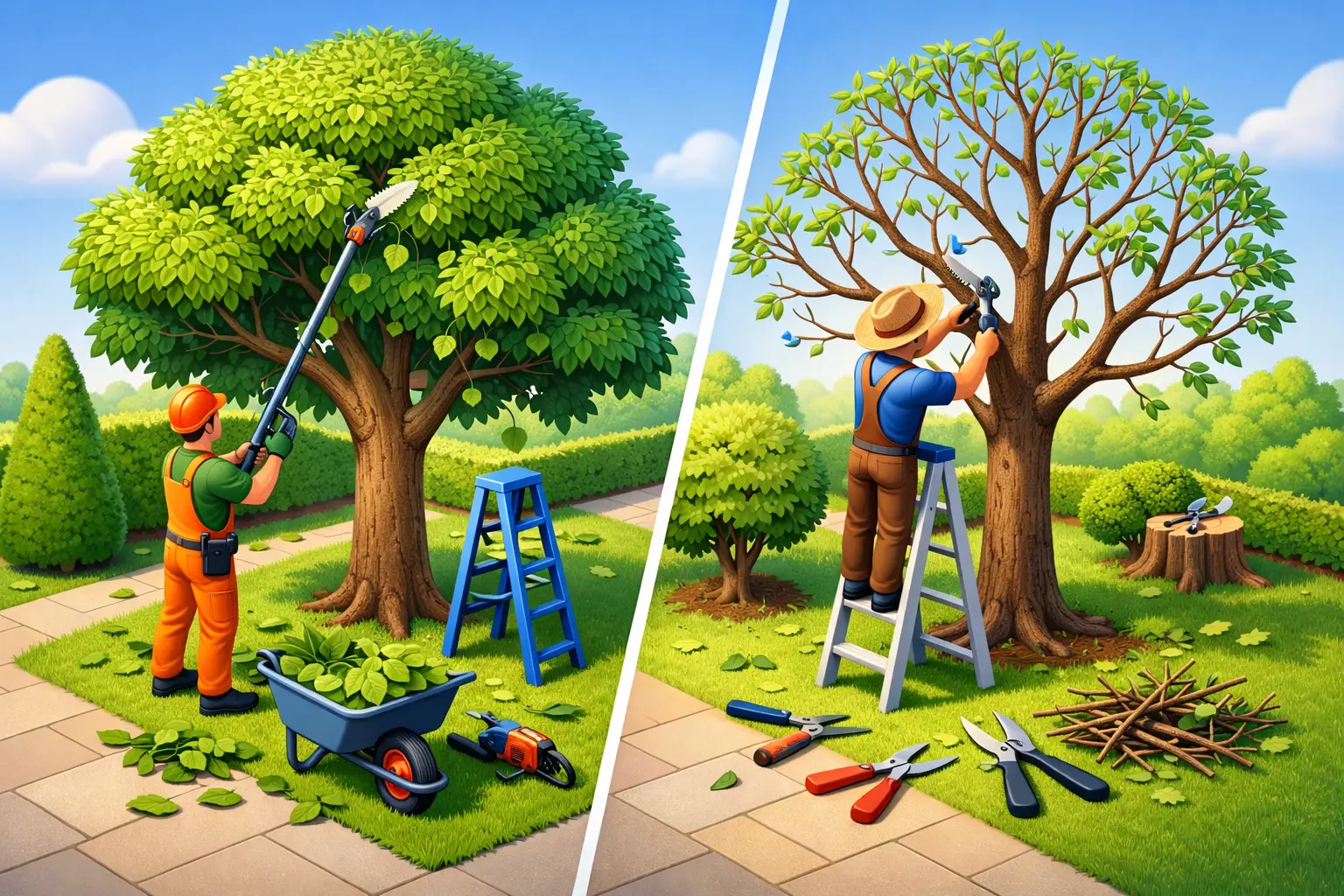
If a tree is hanging over your roof, blocking a driveway, or dropping dead limbs after a storm, the question of tree trimming vs pruning stops being technical pretty fast. Homeowners in Oklahoma City usually just want to know what service fixes the problem, protects the property, and keeps the tree healthy without wasting money.
That is the right way to look at it. Trimming and pruning are related, but they are not the same job. One is often focused on shape, clearance, and appearance. The other is more targeted to the tree’s health, structure, and long-term growth. A good crew knows when the work overlaps and when using the wrong approach can create bigger problems later.
Tree trimming vs pruning: the real difference
In plain terms, tree trimming usually means cutting back overgrown branches to improve clearance and maintain a cleaner, more controlled shape. This is the service people ask for when limbs are crowding the house, hanging over a fence line, brushing the roof, or making the yard feel closed in.
Pruning is more selective. It focuses on removing dead, diseased, damaged, or poorly attached branches so the tree can grow stronger and safer. Pruning can also correct structural issues, especially in younger trees, before they turn into expensive failures later.
The confusion happens because both services involve cutting branches. On the jobsite, the right answer is often a combination. A mature oak may need trimming to pull growth back from the home, but it may also need pruning to remove weak interior limbs or storm-damaged wood. What matters is not the label. What matters is whether the cuts are being made for the right reason.
When trimming is the right call
Trimming is usually the better fit when the tree has outgrown its space. That can mean low limbs over a driveway, branches pressing into a fence, or a canopy that is shading the yard more than you want. On many residential properties, trimming is also part of routine upkeep because it keeps the landscape looking clean and prevents future interference with structures.
In a place like Oklahoma, where wind and spring storms are part of life, trimming can also reduce risk. That does not mean stripping the tree or cutting it back aggressively. It means reducing overextended limbs, thinning problem areas when appropriate, and creating better clearance around the parts of the property you use every day.
There is a trade-off, though. Too much trimming for the sake of appearance can stress a tree and trigger weak regrowth. Homeowners sometimes assume that taking off more now means less maintenance later. In reality, overcutting can create faster, messier growth and increase the chance of breakage. Good trimming improves control without taking the tree past what it can handle safely.
When pruning matters more than appearance
Pruning is usually less about how the tree looks from the street and more about how it is functioning. Dead limbs, crossed branches, included bark, decay pockets, and storm splits are not cosmetic issues. They are warning signs.
That is why pruning is often the better choice when a tree seems unhealthy, unbalanced, or vulnerable to failure. Removing a dead branch over a patio is pruning. Cutting out diseased wood before it spreads farther into the canopy is pruning. Correcting a bad branch attachment in a young tree so it does not split five years from now is pruning too.
This kind of work takes judgment. A branch might look fine from the ground but show signs of weakness at the collar or union once inspected closely. On the other hand, a tree can look dense and overgrown while still needing only minor pruning and a more standard trim for clearance. The best plan depends on species, age, location, and condition.
Why the timing matters in Oklahoma
The timing of tree work is not one-size-fits-all. Some trees handle trimming or pruning better during dormant seasons, while others can be serviced safely during active growth if there is a clear need. Storm damage, broken limbs, and hazardous hangers should be addressed as soon as possible regardless of season.
Oklahoma weather complicates things. Ice, high winds, heavy spring growth, drought stress, and summer heat all affect how a tree responds to cutting. That is one reason rushed or poorly timed work can backfire. If a tree is already stressed by weather, insects, or compacted soil, aggressive cuts can push it further.
For homeowners, the practical takeaway is simple. Do not wait until a limb is scraping shingles or split halfway through before having it looked at. Preventive trimming and pruning are usually cleaner, safer, and less expensive than emergency work after the tree has already failed.
Tree trimming vs pruning around roofs, fences, and power lines
Most residential tree calls are not about textbook definitions. They are about a branch over the roof, a tree crowding the fence, or limbs getting too close to utility lines. In those situations, the difference between trimming and pruning still matters because the wrong cuts can leave the tree unstable or looking hacked apart.
Around a roof, trimming often restores proper clearance and reduces abrasion from branches rubbing on shingles. Around fences, trimming can stop constant contact that wears down boards and stain over time. If the tree has deadwood or a split limb over those same areas, pruning becomes part of the job.
Power lines are different. Trees near energized lines require extra caution and, in many cases, utility coordination. That is not a place for guesswork or shortcuts. Safety comes first, always.
What bad tree work looks like
Most homeowners know when a tree looks overgrown. Fewer know what poor cutting practices look like until the damage shows up later. Topping is one of the biggest red flags. Cutting large sections off the top of a tree may seem like a fast fix for height, but it often leads to weak regrowth, decay, and a rough appearance that never really recovers.
Flush cuts are another problem. When cuts remove the branch collar or are made in the wrong place, the tree has a harder time sealing the wound. Stub cuts are no better because they leave dead tissue behind. Both can open the door to decay and future breakage.
Then there is the cleanup issue. Tree work should not leave your yard buried in brush, sawdust, and scattered debris. Professional service means the work is done safely and the property is left clean. That matters just as much as the cutting itself.
How homeowners should decide what to ask for
If you are not sure whether you need trimming or pruning, that is normal. Most homeowners are better off describing the problem rather than trying to diagnose the service name. Say the limbs are over the house, the canopy feels too dense, the tree dropped a large branch, or something looks dead. A reputable crew should be able to assess the tree and explain what kind of cutting actually solves the issue.
It also helps to think in terms of goals. If your main concern is clearance, visibility, or curb appeal, trimming may be the primary service. If your concern is safety, damage, disease, or structural weakness, pruning may take priority. Very often, the right job includes both.
That is especially true on properties with multiple outdoor needs at once. A tree may need canopy reduction near a fence, selective pruning over a play area, and cleanup after storm debris in the same visit. The value is in having the work planned correctly, not forcing everything into one category.
Why professional evaluation pays off
Tree work looks simple from the ground until someone starts cutting. Weight distribution changes fast. A single bad cut can send a limb into a roof, fence, or parked vehicle. Even when nothing goes wrong immediately, poor cuts can create long-term structural problems that cost more to fix later.
That is why homeowners usually benefit more from a proper on-site evaluation than from trying to price shop based on a generic term. Tree trimming vs pruning is not just a wording issue. It affects how the tree is cut, how much is removed, what equipment is needed, and how the property is protected during the job.
For a family home, the goal is not to make the tree look butchered or leave the yard torn up. The goal is straightforward: safer limbs, healthier growth, better clearance, and a clean result that fits the property. That is the standard a dependable local company should bring to every job.
If a tree on your property is overgrown, damaged, or simply getting too close for comfort, the best next step is to have it looked at before a small issue becomes a dangerous one. The right cut at the right time can protect both the tree and everything around it.


0 Comments