
That old stump in the yard usually becomes a problem before it becomes a priority. It gets in the way of mowing, attracts insects, creates a tripping hazard, and keeps the area from looking finished. When homeowners start weighing stump grinding vs removal, the right choice usually comes down to what you want to do with that part of the yard next, how much disturbance you can tolerate, and how quickly you want the job done.
Both options solve the immediate issue of a leftover stump, but they do it in very different ways. One is typically faster and less disruptive. The other is more complete but can involve more digging, more cleanup, and a bigger impact on the surrounding area. If you are planning work around a fence line, a new patio, fresh sod, or tree planting, that difference matters.
Stump grinding vs removal: the core difference
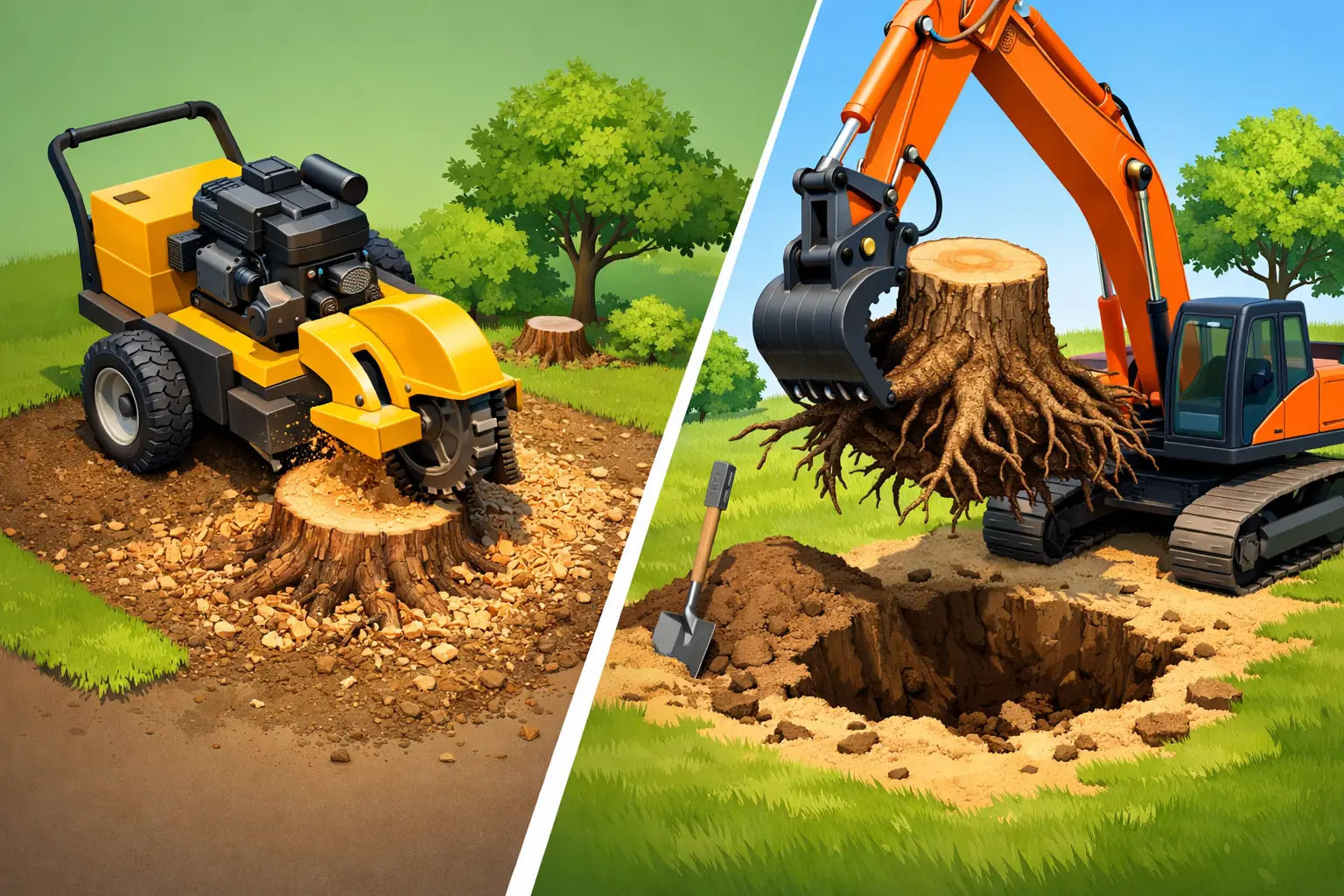
Stump grinding means using specialized equipment to grind the stump down below ground level. The visible stump is gone, and the area can usually be covered with soil, seed, or sod after cleanup. In most cases, the major root system stays in the ground and naturally breaks down over time.
Stump removal is more extensive. Instead of shaving the stump below grade, the entire stump is pulled out along with the main root ball. That creates a much larger hole and a more invasive jobsite, but it clears out the whole base of the tree.
If you only want the stump out of sight and out of the way, grinding is often the practical choice. If you need the full root area cleared for construction or a very specific use of the space, removal may be the better fit.
When stump grinding makes more sense
For many residential yards, stump grinding is the option that checks the most boxes. It is usually quicker, cleaner, and easier on the surrounding lawn and landscaping. If your goal is to improve appearance, eliminate a mowing obstacle, and make the area safer, grinding often gets you there without turning the whole yard into a dig site.
This approach is especially useful when the stump sits near established grass, flower beds, driveways, or fencing. Pulling a stump can disturb nearby surfaces and underground roots well beyond the stump itself. Grinding is more controlled, which helps limit damage around the work area.
It is also a common choice when homeowners want to move on quickly. After a tree removal, many people simply want the yard to look finished again. They are not planning to pour a slab or install a footing in that exact spot. They just want a clean result without a long recovery period for the landscape.
Another factor is access. In some backyards, there is not enough room to bring in larger equipment needed for a full extraction without affecting gates, fencing, or surrounding property. A grinding setup can often be a more workable solution in tighter spaces.
When full stump removal is worth it
There are situations where grinding is not enough. If you are planning to build directly over the spot, install a retaining wall, pour concrete, or rework the grade in a major way, full stump removal may be the smarter long-term decision.
The same goes for cases where the root flare is large and close to the surface, or where future excavation is already part of the plan. Leaving the root mass in place may interfere with that work later. Removal clears the area more completely and reduces the chance of running into buried wood when the next phase begins.
Some property owners also prefer removal when they want to replant in the exact same location. While grinding can make the surface usable again, the remaining roots and buried wood can complicate planting if the new tree needs that same footprint.
The trade-off is disruption. Full removal almost always leaves a larger disturbed area, and the lawn recovery or fill work is more involved. If the yard is already being renovated, that may not matter. If everything around it is in good shape, it is worth considering how much disturbance you are willing to accept.
Cost, cleanup, and speed
Homeowners often start with one simple question: which option costs less? In many cases, stump grinding is more affordable than full removal because it usually takes less labor, less excavation, and less restoration afterward. That said, pricing depends on stump size, root spread, access to the area, and how close the stump is to structures or utilities.
Cleanup is another real difference. Grinding creates wood chips and grindings, which can sometimes be reused as mulch or removed from the site depending on the job plan. Removal creates a hole, loose soil, and heavier debris. It is a bigger cleanup process and often requires more material to backfill and regrade the area properly.
Speed matters too. A grinding job is often the faster path from problem stump to usable yard. Removal can take longer simply because there is more to pull out, more earth to move, and more finishing work afterward.
For homeowners who want safe, clean, done-right results without dragging the project out, grinding is often the more practical answer. But practical is not always the same as best. It depends on what the yard needs next.
Yard plans should drive the decision
The best way to choose between stump grinding vs removal is to think one step ahead. What is happening in that part of the yard after the stump is gone?
If the answer is grass, mulch, or basic landscaping, grinding is usually enough. If the answer is a structural project, major grading, or exact-position replanting, removal may save trouble later.
This matters even more in Oklahoma yards where drainage, clay-heavy soil, and storm-related wear can already make outdoor projects more complicated. A homeowner may not care about the deeper root mass until they are trying to install a new fence line, level a section of yard, or fix water flow around the property. That is why the right recommendation should be based on the next use of the space, not just the stump itself.
What about roots, regrowth, and pests?
One concern people often have with grinding is whether the roots will keep causing problems. In most cases, the remaining roots gradually decay underground. They do not continue growing the way they did when the tree was alive. However, some species can attempt to sprout from remaining roots or the base if conditions are right.
That is one reason professional evaluation matters. The type of tree, the age of the stump, and its condition all affect what to expect after the work is done. If there are signs of decay, pest activity, or unusual root spread near hardscaping, those issues should be factored into the recommendation.
As for insects, a neglected stump can absolutely attract unwanted activity over time, especially when it starts breaking down. Both grinding and removal help address that risk by eliminating the most visible and vulnerable wood mass. The difference is mainly in how much of the below-ground material remains.
Why equipment and experience matter
Stump work looks simple from the street, but it is not a small job. Buried roots, limited access, nearby utilities, irrigation lines, fences, and uneven ground can all turn a straightforward project into one that needs careful planning.
That is why the quality of the work matters just as much as the method. A proper job is not only about getting the stump gone. It is about protecting the rest of the yard, keeping the site safe, and leaving the area clean enough for the next step.
For homeowners in the Oklahoma City area, that usually means working with a crew that can evaluate the full property impact, not just the stump. If the area is close to a fence project, cleanup zone, or other outdoor improvements, having one dependable team look at the whole picture can save time and prevent rework. That is the kind of practical planning Fowler’s Tree & Fence is built around.
So which option is better?
There is no one-size-fits-all answer. If you want a faster, cleaner, less invasive solution for an average residential yard, stump grinding is often the better choice. If you need the entire root base cleared for future construction or major landscape changes, full removal may be worth the extra disruption.
The key is choosing based on the future of the space, not just the stump you see today. A good recommendation should fit your yard, your timeline, and the kind of result you want to live with after the equipment leaves. When that part is handled right, the yard stops feeling like a work zone and starts feeling finished again.


0 Comments